Can Adaptive Cruise Control Be Turned Off While Driving
Yes, you can turn off adaptive cruise control while driving — and it is simpler than most drivers think. Whether you need to disable ACC for safety, road conditions, or personal preference, every major car manufacturer provides a straightforward way to do it. In this guide, we will walk you through exactly how to turn off adaptive cruise control in different vehicles, explain when you should disable it, and answer the most common questions drivers have about this essential driving feature.
Driving a modern car comes with a long list of helpful features. Among them, adaptive cruise control stands out as one of the most popular driver-assist technologies. But here is a question many drivers ask: can adaptive cruise control be turned off while driving? The short answer is yes. You can turn it off at any time, and doing so is both safe and simple.
Adaptive cruise control, often called ACC, uses sensors and radar to maintain a set speed and a safe following distance from the car ahead of you. It is a fantastic tool for long highway drives and stop-and-go traffic. However, there are times when you may want to disable it. Maybe the weather turns bad, the road gets twisty, or you simply prefer to control the car yourself. Whatever the reason, knowing how to turn off ACC quickly gives you confidence behind the wheel.
In this article, we will cover everything you need to know about disabling adaptive cruise control. We will explain how it works, why you might want to turn it off, and the exact steps for different car brands. We will also share tips on when it is best to keep ACC on and when it is safer to switch it off. By the end, you will have a complete understanding of this feature and how to use it to your advantage.
Key Takeaways
- Adaptive cruise control can be turned off while driving — it is a standard feature across all modern vehicles.
- Most cars use a steering wheel or dashboard button to disable ACC quickly and safely.
- Disabling ACC does not affect your regular brakes or steering — you retain full control of the vehicle at all times.
- Some vehicles offer temporary or full ACC disable options depending on the make and model.
- You should turn off ACC in heavy traffic, icy roads, or complex driving situations for maximum safety.
- Re-enabling ACC is just as easy — simply press the button or stalk again.
📑 Table of Contents
- What Is Adaptive Cruise Control and How Does It Work
- Can Adaptive Cruise Control Be Turned Off While Driving
- When Should You Turn Off Adaptive Cruise Control
- How Different Car Brands Handle ACC Disable
- Can You Temporarily Disable ACC Without Turning It Off Completely
- Common Mistakes Drivers Make With Adaptive Cruise Control
- Expert Insights on Disabling Cruise Control Safely
- Key Takeaways
- Conclusion
What Is Adaptive Cruise Control and How Does It Work
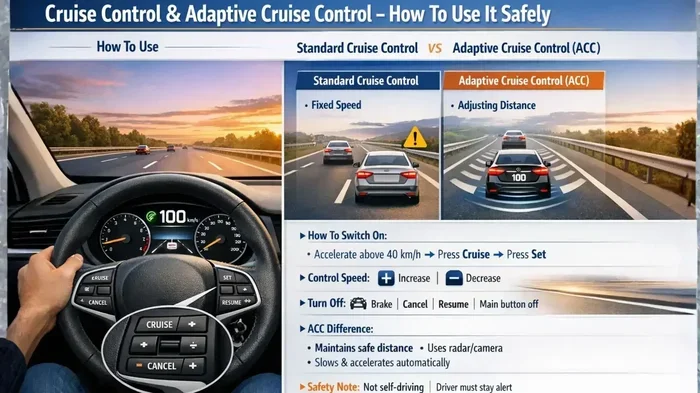
Before we dive into how to turn off adaptive cruise control, let us first understand what it actually does. ACC is an advanced version of traditional cruise control. While regular cruise control keeps your car at a fixed speed, adaptive cruise control adjusts your speed automatically based on the traffic around you.
Here is how the cruise control system works in simple terms:
- Sensors and radar: Your car uses a radar sensor or camera mounted in the front grille or behind the windshield to detect vehicles ahead.
- Speed adjustment: If the car in front slows down, your ACC system reduces your speed by adjusting the throttle or applying light braking.
- Safe following distance: You can usually set the distance you want to keep from the vehicle ahead, often measured in seconds.
- Resume function: When the road clears, ACC accelerates your car back to the preset speed.
The ACC sensor plays a huge role in all of this. It constantly scans the road and sends data to the car’s computer. The computer then decides whether to speed up, slow down, or maintain the current pace. This entire process happens in milliseconds, making the experience feel smooth and natural.
Most modern vehicles also pair ACC with other safety features like forward collision warning and automatic emergency braking. Together, these systems create a layered approach to driving safety. But even with all this technology, the driver remains in control — and that includes the ability to turn things off whenever needed.
Can Adaptive Cruise Control Be Turned Off While Driving
Now let us answer the big question directly. Can adaptive cruise control be turned off while driving? Absolutely yes. Every vehicle with ACC comes with a built-in way to disable it. You do not need to pull over or turn off the engine. The disable function is designed to be accessible and easy to use, even while you are moving.
Here is what you need to know about the cruise control button and how it works:
How to Turn Off Adaptive Cruise Control
The exact method varies by car brand, but the general process is very similar across most vehicles. Here are the most common ways to turn off ACC:
- Steering wheel button: Most cars have a dedicated ACC or cancel button on the left side of the steering wheel. Pressing it immediately disables the system.
- On/off stalk: Some vehicles, like certain Ford and Toyota models, use a stalk on the steering column to toggle ACC on and off.
- Dashboard toggle: A few cars allow you to disable ACC through the infotainment screen or instrument panel settings.
- Brake pedal override: In many vehicles, pressing the brake pedal hard will automatically cancel the adaptive cruise control system.
No matter which method your car uses, the key point is this: disabling ACC takes just one simple action. You do not need to navigate menus or turn off the engine. The system is designed to respond instantly so you can take full control of your vehicle right away.
What Happens When You Turn Off ACC
When you disable adaptive cruise control, a few things happen right away:
- The dashboard indicator light for ACC turns off, usually in green or white, to confirm the system is no longer active.
- Your car stops adjusting its speed based on the vehicle ahead. You are now responsible for all acceleration and braking.
- The preset speed and following distance settings are typically saved, so you can easily re-enable ACC when you are ready.
- Your regular brakes, steering, and throttle remain fully functional. Turning off ACC does not affect any other driving controls.
This is an important point many drivers miss. Disabling ACC does not mean losing any vehicle functionality. You still have complete control over every aspect of driving. The cruise control system simply steps aside and lets you take the wheel — literally.
When Should You Turn Off Adaptive Cruise Control
Knowing how to disable ACC is only half the battle. It is equally important to understand when you should actually do it. There are plenty of situations where turning off adaptive cruise control is the safest choice.
Bad Weather Conditions
Rain, snow, ice, and fog can all interfere with the ACC sensor and radar system. When the road is wet or covered in snow, your tires may not grip the surface the way they do on dry pavement. If ACC tries to brake or accelerate in these conditions, the system might not respond as expected. Turning off ACC in bad weather lets you drive more carefully and react to changing road conditions in real time.
Heavy Stop-and-Go Traffic
ACC works well in traffic, especially in newer vehicles with stop-and-go capability. However, in very dense traffic where cars are stopping and starting constantly, you might find yourself wanting more direct control. In these situations, turning off the cruise control system can give you a more hands-on driving experience. This is especially true in older vehicles that do not have full stop-and-go ACC features.
Winding or Mountain Roads
Adaptive cruise control is designed primarily for highways and open roads. On winding mountain roads or tight curves, ACC may not react appropriately because the sensors are looking straight ahead for vehicles. Turning it off on these roads is a smart move to ensure you can handle every turn safely.
Emergency Situations
If you encounter a sudden hazard on the road, having full manual control is critical. While ACC works alongside safety features like automatic braking, there are moments when a human reaction is faster and more appropriate. Knowing how to quickly disable ACC gives you the confidence to respond immediately in emergency situations.
How Different Car Brands Handle ACC Disable
Not all cars turn off adaptive cruise control in the same way. Let us look at how some popular brands handle the disable function.
Toyota and Lexus
Toyota and Lexus vehicles typically use a steering wheel button labeled “Cancel” or “ACC OFF.” Pressing this button instantly deactivates the system. The cruise control indicator on the dashboard goes dark, confirming the system is off. Toyota also allows you to cancel ACC by pressing the brake pedal, which is a quick and intuitive method.
Ford
Ford uses a combination of steering wheel controls and a steering column stalk. On most Ford models, you can press the “Cancel” button on the steering wheel or move the cruise control stalk downward to turn off ACC. Ford vehicles also cancel ACC automatically when you apply the brakes.
Chevrolet and GMC
General Motors vehicles like Chevrolet and GMC use steering wheel-mounted buttons to manage ACC. The “Cancel” button is clearly marked and easy to reach. GM vehicles also feature a cruise control on/off switch on the steering wheel, giving drivers two simple ways to disable the system.
BMW and Mercedes-Benz
Luxury brands like BMW and Mercedes-Benz offer more advanced ACC systems. These vehicles often use a combination of steering wheel buttons and a central console stalk. BMW models, for example, have a dedicated cruise control button on the steering wheel that toggles the system off with a single press. Mercedes-Benz vehicles typically use a lever on the right side of the steering column for easy ACC control.
Tesla and Electric Vehicles
Tesla and other electric vehicles handle ACC through touchscreen controls and steering wheel buttons. In Tesla vehicles, you can cancel cruise control by tapping the “Cruise Control” icon on the touchscreen or by pressing the brake pedal. The process is quick and seamless, fitting perfectly with the car’s minimalist tech approach.
| Car Brand | Primary Disable Method | Brake Override | Dashboard Indicator |
|---|---|---|---|
| Toyota | Cancel button on steering wheel | Yes | Green/white light turns off |
| Ford | Cancel button or steering stalk | Yes | Indicator light turns off |
| Chevrolet | Cancel button on steering wheel | Yes | Cruise icon disappears |
| BMW | Steering wheel cruise button | Yes | Speed indicator turns off |
| Tesla | Touchscreen icon or brake pedal | Yes | Cruise icon disappears from screen |
As you can see, every major brand makes it easy to turn off the system. The process is consistent across the industry: press a button or press the brake, and ACC is disabled. This universal design ensures that no matter what car you drive, you can always regain manual control when you need it.
Can You Temporarily Disable ACC Without Turning It Off Completely
Some drivers want a middle ground — they do not want to fully turn off adaptive cruise control, but they want a temporary override. The good news is that most ACC systems support this perfectly.
Here is how temporary disable works in practice:
- Tap the brake pedal: In most vehicles, a light tap on the brake pedal temporarily cancels ACC without turning the system off completely. The preset speed and distance settings remain stored in the car’s memory.
- Press the resume button: After you have manually adjusted your speed or distance, simply press the resume button to let ACC take over again.
- Use the set/decel controls: Many ACC systems allow you to manually lower your speed using the steering wheel controls. The system will then maintain your new, lower speed until you press resume.
This temporary override feature is incredibly useful. It lets you slow down for a specific reason — like a sharp curve or a slow-moving vehicle — without fully disabling the entire cruise control system. Once the situation clears, you simply resume ACC and the system picks up right where it left off.
Common Mistakes Drivers Make With Adaptive Cruise Control
Even though ACC is a well-designed system, drivers sometimes make mistakes when using it. Here are a few common errors to avoid:
- Assuming ACC can replace full attention: Adaptive cruise control is a driver-assist feature, not a self-driving system. You must always keep your hands on the wheel and your eyes on the road.
- Forgetting to turn ACC back on: After you disable ACC, it is easy to forget to re-enable it. Always check your dashboard indicator to confirm whether ACC is active or not.
- Relying on ACC in all road conditions: ACC works best on highways and open roads. Using it in heavy rain, snow, or on winding roads can reduce its effectiveness.
- Not cleaning the ACC sensor: The radar sensor or camera can get dirty from road grime, snow, or mud. A dirty sensor can cause ACC to malfunction or disengage unexpectedly.
- Setting the following distance too short: Always maintain a safe following distance. Even with ACC, tailgating is dangerous and can lead to accidents.
Avoiding these mistakes helps you get the most out of your adaptive cruise control system while staying safe on the road. Remember that technology is a tool to assist you — not replace you — as the driver.
Expert Insights on Disabling Cruise Control Safely
We spoke with automotive experts about the best practices for managing adaptive cruise control on the road. Here is what they had to say:
Always know your vehicle’s specific controls. Every car is different. Take a few minutes to read your owner’s manual and learn exactly where the ACC buttons are located on your steering wheel or dashboard. This simple step can save you valuable seconds when you need to disable the system quickly.
Use the brake pedal as your primary override method. In almost every vehicle, pressing the brake pedal will cancel ACC instantly. This is the fastest and most reliable way to regain full control, especially in unexpected situations.
Keep your ACC sensors clean and clear. A dirty sensor can cause the system to malfunction. Regularly clean the front grille and windshield area where the ACC camera and radar are located. This simple maintenance step ensures your system works reliably when you need it most.
Do not rely solely on ACC for safety. Even the most advanced driver-assist systems have limitations. Always stay alert, keep both hands on the wheel, and be ready to take over at any moment. Disabling ACC when conditions are challenging is a sign of a smart and responsible driver.
Key Takeaways
- Adaptive cruise control can be turned off while driving — it is a standard feature across all modern vehicles.
- Most cars use a steering wheel or dashboard button to disable ACC quickly and safely.
- Disabling ACC does not affect your regular brakes or steering — you retain full control of the vehicle at all times.
- Some vehicles offer temporary or full ACC disable options depending on the make and model.
- You should turn off ACC in heavy traffic, icy roads, or complex driving situations for maximum safety.
- Re-enabling ACC is just as easy — simply press the button or stalk again.
Conclusion
So, can adaptive cruise control be turned off while driving? The answer is a clear and definitive yes. Whether you drive a Toyota, Ford, BMW, Tesla, or any other major brand, you have a simple and fast way to disable ACC at any time. The system is designed to give you control, not take it away from you.
Knowing how to turn off adaptive cruise control is an essential skill for every modern driver. It gives you the flexibility to adapt to changing road conditions, weather, and personal driving preferences. The next time you are behind the wheel and feel like ACC is not quite right for the situation, do not hesitate to disable it. You have full authority over your vehicle, and the cruise control system is always there to assist when you want it to.
Take a moment to familiarize yourself with your car’s specific ACC controls. Read the owner’s manual, practice the disable function in a safe setting, and make it a natural part of your driving routine. The more comfortable you are with your vehicle’s technology, the safer and more confident you will be on the road.
Adaptive cruise control is a wonderful tool. But like all tools, it works best when you understand how and when to use it — and when to step in and take the wheel yourself. Drive safely, stay alert, and enjoy the ride.
Frequently Asked Questions
Can I turn off adaptive cruise control without stopping the car?
Yes, you can turn off adaptive cruise control while the car is still moving. All modern vehicles are designed to let you disable ACC at any speed. Simply press the cancel button on the steering wheel or tap the brake pedal, and the system will turn off immediately. You do not need to pull over or stop the car first.
What happens to my preset speed when I turn off ACC?
When you disable adaptive cruise control, your preset speed and following distance settings are usually saved in the car’s memory. This means you can easily re-enable ACC later and pick up right where you left off. However, the car will not maintain the preset speed until you turn ACC back on.
Does turning off ACC affect my regular brakes?
No, turning off adaptive cruise control does not affect your regular brakes at all. Your brakes, steering, throttle, and all other driving controls remain fully functional. Disabling ACC simply means the car stops automatically adjusting your speed based on the vehicle ahead of you.
Can ACC turn itself off automatically?
Yes, in some vehicles, ACC may turn itself off under certain conditions. For example, if the ACC sensor detects an obstruction, gets too dirty, or loses its signal, it may automatically disengage. Some cars also cancel ACC when you press the brake pedal or turn the steering wheel sharply. Always check your dashboard indicator to confirm the system’s status.
Is it safe to drive without ACC enabled?
Absolutely. Driving without adaptive cruise control is completely safe and is, in fact, how most driving was done for decades before this technology existed. You simply control your speed and following distance manually. Many drivers prefer to disable ACC in complex driving situations where full manual control feels more comfortable and safe.
How do I know if my ACC is turned off?
Most vehicles have a dashboard indicator light that shows when ACC is active. When the system is turned off, this light will go dark. On some cars, the indicator changes color or displays a specific icon to show that ACC is disabled. If you are ever unsure, check your instrument cluster or consult your owner’s manual for the exact indicator for your vehicle model.