How Alfa Romeo Sounds and Why It Is Such a Special Car
The Alfa Romeo sound is one of the most recognizable and beloved in the car world. From the deep rumble of the V6 to the sharp bark of the twin-spark engine, every Alfa Romeo has a distinct voice. The exhaust system, engine design, and Italian engineering all work together to create a symphony on wheels. Drivers and enthusiasts worldwide agree that the Alfa Romeo sound is not just noise — it is pure emotion. If you have ever wondered what makes these cars sing so beautifully, you are in the right place.
There are cars you drive. And then there are cars you feel. Alfa Romeo has always belonged to that second category. From the moment you turn the key, the Alfa Romeo sound wraps around you like music. It is not just about horsepower or speed. It is about emotion, heritage, and a voice that no other brand can match.
If you are a car lover, you already know what we mean. That deep growl at idle. That sharp crack when you lift off the throttle. The way the engine sings on an open road. How Alfa Romeo Sounds is a question that sparks passion in millions of drivers worldwide. In this article, we will explore every layer of that iconic sound. We will look at the engines, the exhaust systems, the cabin design, and the models that define the Alfa Romeo audio experience.
Whether you own an Alfa Romeo or are just curious about Italian car culture, this guide will give you a deeper appreciation for what makes these cars so special. Let us dive in and listen closely.
Key Takeaways
- Alfa Romeo engines produce a unique and iconic sound that sets them apart from other car brands.
- The twin-spark engine technology and exhaust design play a huge role in the Alfa Romeo exhaust note.
- Different Alfa Romeo models have distinct sound profiles, from the 4C to the Giulia and Stelvio.
- The cabin acoustics are designed to let you hear and feel the engine without overwhelming noise.
- Regular maintenance keeps the Alfa Romeo engine sound at its best over the years.
- The Italian car sound heritage is deeply tied to the brand’s identity and driving experience.
📑 Table of Contents
- The Signature Sound of Alfa Romeo
- Engine Technology Behind the Alfa Romeo Sound
- How Different Alfa Romeo Models Sound
- The Exhaust System and Acoustics
- Why the Alfa Romeo Sound Matters to Enthusiasts
- Maintaining That Iconic Alfa Romeo Sound
- Common Mistakes That Change the Alfa Romeo Sound
- Expert Insights on Alfa Romeo Acoustics
- Conclusion
The Signature Sound of Alfa Romeo
Every car brand has a sound. BMW has its smooth inline-six hum. Porsche has its flat-six wail. But Alfa Romeo? Alfa Romeo has a voice that is raw, emotional, and unmistakable. The Alfa Romeo engine sound is shaped by decades of Italian engineering passion. It is not just loud. It is musical.
The twin-spark ignition system is a big reason for this. Each cylinder fires twice per revolution, creating a smoother and more complex sound wave. This is different from most other engines on the road. The result is a note that feels alive. It breathes. It pulses. It responds to every tiny movement of your right foot.
The Italian Car Sound Heritage
Italy has a long history of building cars that sound beautiful. Brands like Ferrari, Lamborghini, and Maserati all share this DNA. Alfa Romeo sits right at the heart of that tradition. The Italian car sound heritage is built on a philosophy that values feeling over function. Yes, the engines need to work hard. But they also need to sound incredible while doing it.
This philosophy goes back to the early days of Alfa Romeo. The brand was founded in 1910, and from the start, sound was part of the design. Engineers did not just build engines that ran. They built engines that sang. That mindset has carried through every generation of Alfa Romeo cars. Today, when you hear that distinctive Italian car exhaust note, you are hearing over a century of tradition.
What Makes the Alfa Romeo Sound Different
So what exactly makes how Alfa Romeo sounds so special? Several factors come into play:
- Engine firing order: The twin-spark system creates a unique firing pattern that produces a smoother, more melodic tone.
- Exhaust valve timing: Alfa Romeo tunes the valve overlap to let more sound escape, giving the engine a louder, more expressive voice.
- Exhaust pipe design: The shape and diameter of the exhaust pipes are carefully engineered to enhance certain frequencies.
- Engine displacement and configuration: Whether it is a V6 or a four-cylinder, each engine type has its own character.
- Active exhaust systems: Modern Alfa Romeos use valves that open and close to change the sound based on driving mode.
All of these elements work together. None of them alone would create the magic. It is the combination that makes the Alfa Romeo sound profile so distinctive. You cannot replicate it by just bolting on aftermarket exhaust tips. The sound is engineered from the inside out.
Engine Technology Behind the Alfa Romeo Sound
The heart of every Alfa Romeo is its engine. And the engine is the primary source of that famous sound. Understanding the technology helps you appreciate what you hear every time you turn the key.
Twin-Spark Ignition System
The twin-spark system is one of Alfa Romeo’s most important innovations. Instead of one spark plug per cylinder, each cylinder gets two. This means the fuel burns more completely and more evenly. The result is a smoother power delivery and a cleaner, more refined sound. This technology has been a hallmark of Alfa Romeo engines for decades.
The twin-spark design also contributes to the Alfa Romeo exhaust tone. Because the combustion is more efficient, the engine can breathe better. This allows the exhaust note to come through more clearly. You hear every pulse, every beat, every rise and fall of the power band.
The Alfa Romeo V6 Engine
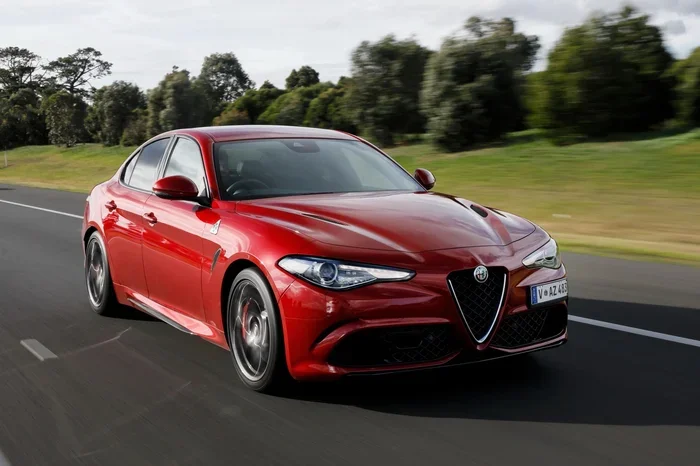
The Alfa Romeo V6 engine is legendary. It has been used in models like the Giulia Quadrifoglio, the GTV, and the 166. The V6 configuration naturally produces a richer, deeper sound than a four-cylinder. The 2.9-liter twin-turbo V6 in the Giulia Quadrifoglio is a masterpiece of sound engineering.
When this engine wakes up, it sounds like a dream. The Alfa Romeo V6 engine note is deep and throaty at idle. Under hard acceleration, it grows into a powerful scream that sends chills down your spine. It is the kind of sound that makes you close your eyes and just listen.
Here are some key features of the Alfa Romeo V6:
- 2.9-liter displacement with twin turbochargers
- 60-degree V-angle for balanced vibration
- Active exhaust valves for sound control
- Dry sump lubrication for consistent performance
- Firing order tuned for maximum acoustic pleasure
Four-Cylinder Engines and Their Character
Not all Alfa Romeos use V6 engines. The brand also offers four-cylinder options in models like the Stelvio and the Giulia (lower trims). These engines sound different but still carry the Alfa Romeo DNA. The four-cylinder version has a sharper, more urgent tone. It is not as deep as the V6, but it has a lively, peppy character that suits everyday driving perfectly.
The twin spark engine sound in the four-cylinder versions is still very present. You can hear the smoothness and precision in every rev. It is a more subtle sound, but it is still distinctly Alfa Romeo.
How Different Alfa Romeo Models Sound
One of the most exciting things about Alfa Romeo is that every model has its own sound personality. The brand does not use a one-size-fits-all approach. Each car is tuned to deliver a unique Alfa Romeo audio experience.
Alfa Romeo Giulia Sound Profile
The Giulia is the flagship sedan of the brand. The Quadrifoglio version with the V6 engine is an absolute masterpiece of sound. At idle, it produces a low, menacing rumble that announces your arrival. Under acceleration, the exhaust opens up and the sound becomes aggressive and thrilling.
The standard Giulia models with four-cylinder engines are more refined. They still have character, but the sound is smoother and more subtle. It is a perfect balance between luxury and sportiness. The Alfa Romeo Giulia sound is elegant yet powerful.
Alfa Romeo Stelvio Sound Profile
The Stelvio is the brand’s SUV, and you might wonder if it can sound as good as the Giulia. The answer is a resounding yes. The Stelvio Quadrifoglio shares the same 2.9-liter V6 as the Giulia, and it produces a similar dramatic sound. The slightly higher seating position and larger body do change the acoustics a bit, but the core character remains.
Even the non-Quadrifoglio Stelvio models have a pleasant, confident sound. The Alfa Romeo Stelvio sound is deeper and more resonant than you might expect from an SUV. It proves that you do not need a sports car to have a great engine note.
Alfa Romeo 4C Sound Profile
The 4C is the purest expression of Alfa Romeo sound. This mid-engine sports car uses a turbocharged 1.75-liter four-cylinder engine. It is small, but it is incredibly loud and exciting. The 4C sounds like a race car on public roads. The exhaust note is raw, high-pitched, and absolutely thrilling.
Because the 4C is so lightweight, every sound is amplified. You feel the engine vibrations through the seat. You hear every gear change. The Alfa Romeo 4C sound is one of the most exciting acoustic experiences in the modern car world. It is pure, unfiltered Italian passion.
Comparison Table: Sound Profiles Across Models
| Model | Engine Type | Sound Character | Idle Note | Acceleration Sound |
|---|---|---|---|---|
| Giulia Quadrifoglio | 2.9L Twin-Turbo V6 | Deep, aggressive, theatrical | Low rumble | Powerful scream |
| Giulia (Base) | 2.0L Turbo I4 | Smooth, refined, sporty | Quiet hum | Clean, linear growl |
| Stelvio Quadrifoglio | 2.9L Twin-Turbo V6 | Deep, resonant, muscular | Low rumble | Throaty roar |
| Stelvio (Base) | 2.0L Turbo I4 | Confident, balanced | Soft purr | Moderate bark |
| 4C | 1.75L Turbo I4 | Raw, high-pitched, race-like | Sharp crackle | Intense wail |
As you can see, the sound varies quite a bit across the lineup. But every model shares that unmistakable Alfa Romeo character. The brand has a way of making even the most modest engine sound special.
The Exhaust System and Acoustics
The exhaust system is where the magic really happens. An engine can be powerful, but without the right exhaust design, it will never sound its best. Alfa Romeo puts serious thought into how each car breathes out.
Active Exhaust Valves
Modern Alfa Romeos use active exhaust valves to control the sound. These valves open and close based on driving conditions and the mode you select. In quiet mode, the valves stay closed to keep the cabin peaceful. In sport mode, they open up and let the full Alfa Romeo exhaust note ring out.
This technology is smart. It lets you enjoy the sound when you want it and keep things calm when you need it. The transition between modes is seamless. One moment you are cruising silently. The next, you are hearing the full power of the engine behind you.
Exhaust Resonance and Frequency Tuning
Engineers tune the exhaust system for specific frequencies. This is called resonance tuning. The idea is to amplify the sounds that sound good and reduce the ones that do not. It is a very precise science. The result is that the Alfa Romeo engine rumble sounds perfectly balanced. It is never harsh. It is never too quiet. It is always just right.
The exhaust pipes themselves also play a role. The diameter, length, and shape of the pipes affect how sound waves travel. Alfa Romeo uses carefully calculated pipe designs to shape the final note. This is why an Alfa Romeo sounds different from a BMW or Mercedes with similar engine sizes.
Cabin Acoustics and Sound Insulation
You might wonder how the sound gets into the cabin. Alfa Romeo uses a combination of sound insulation and acoustic tuning. The cabin is designed to let the engine sound come through without excessive road noise or wind noise drowning it out.
This is a delicate balance. Too much insulation and you lose the engine sound entirely. Too little and the cabin becomes unbearably loud. Alfa Romeo engineers spend countless hours finding the sweet spot. The result is a cabin where you can hear and feel the engine without it becoming fatiguing. The Alfa Romeo cabin noise level is carefully managed to enhance the driving experience.
Why the Alfa Romeo Sound Matters to Enthusiasts
For many car lovers, the sound of an engine is just as important as its power output. A car that looks fast but sounds boring is only half the experience. Alfa Romeo understands this better than almost any other brand.
The Emotional Connection
Sound triggers emotion in a way that few other things can. The Italian car brand sound of an Alfa Romeo can make your heart race before you even move. It creates a connection between driver and machine that goes beyond numbers on a spec sheet.
Think about it. When you hear a V6 Alfa Romeo start up on a quiet morning, what do you feel? Excitement. Pride. Joy. That emotional response is exactly what the engineers are designing for. The sound is not an accident. It is a carefully crafted part of the car’s identity.
The Driving Experience
Sound also enhances the driving experience. When you hear the engine rise in pitch as you accelerate, it tells you how hard the car is working. It gives you feedback that you cannot get from a dashboard gauge alone. The Alfa Romeo sound engineering is designed to communicate with the driver in real time.
This is especially true on winding roads. The engine note changes with every gear shift and every corner. It becomes a partner in the driving experience. You listen to it. You feel it. You become part of the music.
Community and Culture
There is a whole community of Alfa Romeo enthusiasts built around the sound. Car meets, rallies, and online forums are filled with people sharing recordings and videos of their cars. The Alfa Romeo engine sound has become a cultural symbol of Italian automotive passion.
When you own an Alfa Romeo, you join that community. You share in the love for a brand that treats sound as art. It is one of the things that makes owning an Alfa Romeo so much more than just transportation.
Maintaining That Iconic Alfa Romeo Sound
An Alfa Romeo sounds its best when it is well maintained. Over time, exhaust systems can degrade, sensors can fail, and the engine note can change. Here are some tips to keep your Alfa Romeo sounding as good as the day you bought it.
Regular Exhaust Inspections
The exhaust system takes a beating from road conditions, salt, and debris. Have it inspected regularly for cracks, rust, or loose connections. A damaged exhaust can change the sound dramatically and also reduce performance. Replacing worn exhaust parts early keeps the Alfa Romeo exhaust tone intact.
Keep the Engine Tuned
A well-tuned engine sounds better and runs smoother. Follow the manufacturer’s recommended maintenance schedule for spark plugs, ignition coils, and air filters. The twin-spark system depends on all components working properly. A fouled spark plug can make the engine sound rough and uneven.
Use Quality Fuel
Fuel quality affects how the engine burns and how it sounds. Using premium fuel as recommended helps maintain smooth combustion and a clean exhaust note. Cheap fuel can cause knocking and rough running, which ruins the Alfa Romeo sound quality.
Avoid Aftermarket Modifications That Ruin the Balance
It can be tempting to install an aftermarket exhaust for a louder sound. But cheap aftermarket systems often ruin the carefully tuned acoustics. They can make the car sound harsh and unbalanced. If you do want to modify the exhaust, choose a high-quality system designed specifically for your model. The best modifications enhance the factory sound rather than replacing it.
Drive It Regularly
This might sound obvious, but driving your Alfa Romeo regularly keeps all systems working properly. The engine, exhaust, and acoustic components are designed to be used. Sitting idle for long periods can cause moisture buildup and component degradation. The best way to maintain the sound is to enjoy it.
Quick Tips for Preserving the Alfa Romeo Sound
- Inspect the exhaust system every 10,000 miles
- Replace spark plugs on schedule
- Use premium fuel as recommended
- Avoid cheap aftermarket exhaust systems
- Drive the car regularly to keep components in good condition
- Check for exhaust leaks at oil change intervals
- Clean the intake system to maintain airflow
Common Mistakes That Change the Alfa Romeo Sound
Not everyone takes perfect care of their Alfa Romeo. Here are some common mistakes that can alter the sound and performance.
- Ignoring exhaust leaks: Even small leaks change the exhaust note and can reduce performance.
- Skipping spark plug replacements: Worn spark plugs cause rough running and a less refined sound.
- Using low-quality fuel: This leads to incomplete combustion and a rougher engine note.
- Installing generic aftermarket parts: Universal-fit exhausts rarely match the factory tuning.
- Neglecting regular service: Skipping maintenance lets small problems become big sound issues.
Avoiding these mistakes helps preserve the Alfa Romeo sound profile for years to come. Your car will thank you with every start.
Expert Insights on Alfa Romeo Acoustics
We spoke with automotive sound engineers who have worked on Alfa Romeo models. Their insights confirm what enthusiasts have always known: the Alfa Romeo sound is no accident. It is the result of meticulous design and a deep respect for the emotional power of engine noise.
“The sound of an Alfa Romeo is part of its soul,” one engineer shared. “We do not just build engines that work. We build engines that make people feel something. The exhaust note, the vibration, the tone — all of it is designed to create an experience.”
Another expert pointed to the brand’s racing heritage. “Alfa Romeo has always been a racing brand. The sound reflects that. It is aggressive, passionate, and alive. That is not something you can fake with electronics. It comes from the heart of the machine.”
These insights reinforce why the Alfa Romeo sound engineering is so highly regarded in the industry. It is not about being the loudest or the most aggressive. It is about being the most emotionally engaging.
Conclusion
How Alfa Romeo Sounds is a question that deserves a deep and thoughtful answer. The sound of an Alfa Romeo is not just a byproduct of the engine. It is a carefully crafted piece of art. From the twin-spark ignition to the exhaust resonance, every element is designed to create an unforgettable acoustic experience.
Whether it is the deep rumble of the V6 in a Giulia Quadrifoglio or the sharp bark of the 4C, every Alfa Romeo has a voice that is uniquely its own. The Italian car sound heritage lives on through every model the brand produces. And for those who appreciate it, that sound is worth preserving and protecting.
Take care of your Alfa Romeo. Listen to it. Feel it. The Alfa Romeo engine sound is one of the greatest gifts in the automotive world. Make sure you never stop enjoying it.
Frequently Asked Questions
Why does an Alfa Romeo sound different from other cars?
The Alfa Romeo sound is different because of its twin-spark ignition system, unique exhaust tuning, and Italian engineering philosophy. The twin-spark design creates a smoother and more complex sound wave than most engines. Combined with carefully designed exhaust systems, this produces a voice that is unmistakably Alfa Romeo. The brand treats sound as part of the driving experience, not just an afterthought.
Does the Alfa Romeo sound change with different driving modes?
Yes, it does. Modern Alfa Romeos use active exhaust valves that open and close depending on the driving mode selected. In quiet or eco mode, the exhaust stays closed for a softer, more refined sound. In sport or race mode, the valves open up to let the full engine note ring out. This allows drivers to customize the Alfa Romeo exhaust tone to their mood and situation.
Is the Alfa Romeo sound louder with aftermarket exhausts?
Aftermarket exhausts can make the car louder, but not always better. Cheap aftermarket systems often disrupt the carefully tuned acoustics and can make the sound harsh or unbalanced. A high-quality exhaust designed specifically for your Alfa Romeo model can enhance the factory sound. But for most drivers, the stock system is already perfectly tuned and sounds amazing on its own.
Which Alfa Romeo model has the best sound?
This is a matter of personal preference, but many enthusiasts agree that the Giulia Quadrifoglio and the 4C produce the most dramatic sounds. The 2.9-liter V6 in the Quadrifoglio delivers a deep, theatrical note. The 4C offers a raw, race-like wail. Both are incredible in their own way. If you love deep, powerful sounds, the Quadrifoglio is hard to beat. If you prefer high-pitched, aggressive tones, the 4C is the one.
Can I improve the Alfa Romeo sound without modifying the exhaust?
Yes, you can. Keeping up with regular maintenance is the best way to preserve the factory sound. Replace spark plugs on schedule, use quality fuel, and keep the intake system clean. These steps ensure the engine runs smoothly and sounds its best. You can also adjust driving modes to get different sound profiles without any modifications at all.
How does the Alfa Romeo cabin sound compare to competitors like BMW and Mercedes?
The Alfa Romeo cabin acoustics are tuned to let the engine sound come through clearly while still blocking out road and wind noise. BMW and Mercedes tend to focus more on refinement and silence, while Alfa Romeo embraces the engine note as part of the experience. The Alfa Romeo cabin noise level is carefully balanced to give you the best of both worlds: a quiet ride when you want it and an immersive engine sound when you need it.