Are Hyundai OEM Parts Legit Everything You Need to Know
Hyundai OEM parts are 100% legitimate and made by the same manufacturer that supplies parts for your vehicle. Using genuine Hyundai parts ensures perfect fit, safety, and warranty protection. This guide covers everything you need to know about buying and using authentic Hyundai OEM parts.
If you own a Hyundai, you have probably wondered about Hyundai OEM parts at some point. Maybe your check engine light came on, or you needed a replacement part after a minor accident. And then you saw the price tag for genuine parts and thought, “Are Hyundai OEM parts legit, or is this just a way to spend more money?”
That is a fair question. The auto parts world can be confusing. There are genuine Hyundai parts, aftermarket options, refurbished pieces, and a whole lot of marketing jargon flying around. It is easy to feel overwhelmed. But here is the truth: Hyundai OEM parts are completely legitimate. They are made by the same manufacturer that originally built the parts for your car. They are not knockoffs. They are not replicas. They are the real deal.
In this guide, we will walk through everything you need to know. We will cover what OEM parts actually are, how to spot fake parts, whether they are worth the cost, and where to buy them safely. By the end, you will feel confident making the right choice for your Hyundai maintenance needs.
Let us get into it.
Key Takeaways
- Hyundai OEM parts are genuine: They come directly from Hyundai or authorized suppliers and meet strict quality standards.
- OEM parts protect your warranty: Using non-genuine parts can void your Hyundai warranty coverage.
- Spotting fakes is important: Counterfeit parts exist, but you can identify them through serial numbers, packaging, and sourcing.
- OEM parts cost more but last longer: The upfront cost is higher, but they save money in the long run.
- Buy from trusted sources: Authorized dealerships and official Hyundai parts distributors are the safest options.
- Aftermarket parts have a place: They work for some situations, but OEM parts remain the gold standard for quality and safety.
📑 Table of Contents
- What Are Hyundai OEM Parts?
- How to Tell If Hyundai Parts Are Genuine
- OEM Parts vs Aftermarket Parts: Which Is Better?
- Do Hyundai OEM Parts Come With a Warranty?
- Common Myths About Hyundai OEM Parts
- Where to Buy Authentic Hyundai OEM Parts
- How OEM Parts Improve Your Hyundai’s Longevity
- Are Hyundai OEM Parts Legit? The Final Word
What Are Hyundai OEM Parts?
OEM stands for Original Equipment Manufacturer. When Hyundai builds a car, it does not make every single part itself. Instead, it partners with specialized suppliers. These suppliers manufacture parts like brake pads, alternators, sensors, and body panels. Hyundai then puts those parts into their vehicles during assembly.
When you buy Hyundai OEM parts, you are buying the exact same parts that went into your car on the factory floor. The part number matches. The material matches. The fit and function match perfectly.
How OEM Parts Differ from Aftermarket Parts
Aftermarket parts are made by third-party companies. They are designed to fit your vehicle, but they are not produced by Hyundai or its original suppliers. Think of it this way:
- OEM parts: Made by the same company that built your car originally.
- Aftermarket parts: Made by a different company that designs parts to fit your car.
Aftermarket parts are not necessarily bad. Some aftermarket brands offer high-quality alternatives at lower prices. But they do not always match the exact specifications of Hyundai OEM parts. And that difference matters, especially for safety-critical components.
Why Part Numbers Matter
Every genuine Hyundai part has a unique part number. This number tells you exactly what the part is, what vehicle it fits, and what year and model it belongs to. When you order by part number, you eliminate any guesswork. If a seller cannot provide the part number, that is a red flag.
Quick Tip
Always ask for the part number when purchasing Hyundai OEM parts. You can also find the part number in your owner’s manual or by contacting your local Hyundai dealership.
How to Tell If Hyundai Parts Are Genuine
This is one of the most important sections in this article. Counterfeit auto parts are a real problem in the automotive industry. Fake parts can compromise your safety, reduce your vehicle’s performance, and even cause further damage to your car. Knowing how to identify genuine Hyundai parts is essential.
Check the Packaging
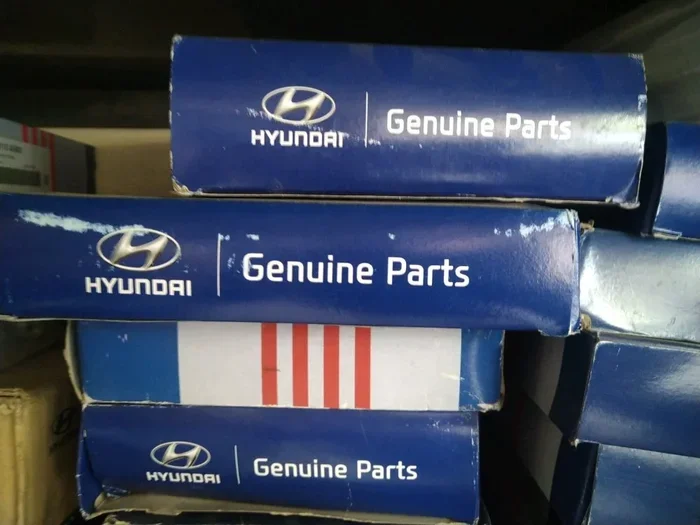
Authentic Hyundai OEM parts come in professional packaging. Look for:
- The Hyundai logo printed clearly on the box or box.
- A barcode or QR code that can be scanned for verification.
- Correct part numbers printed on the label.
- No spelling errors or blurry printing.
If the packaging looks cheap or generic, be cautious. Genuine Hyundai parts are packaged with care and attention to detail.
Verify the Serial Number
Many Hyundai OEM parts come with a serial number or traceability code. You can verify this through Hyundai’s official parts portal or by contacting a dealership. This step is especially important for expensive components like Hyundai engine parts or electronic modules.
Inspect the Part Itself
When you receive the part, look closely at the quality. OEM parts have clean edges, consistent coloring, and precise markings. Aftermarket or counterfeit parts often have rough edges, mismatched colors, or missing logos. Trust your instincts. If something looks off, it probably is.
Expert Insight
“Counterfeit brake pads and airbags are the most dangerous fake parts on the market,” says a certified Hyundai technician with over 15 years of experience. “Always buy from authorized sources. No price savings is worth your safety.”
Common Mistakes When Verifying Parts
Here are some mistakes people make when checking if their parts are genuine:
- Skipping verification entirely: Just trusting the seller without checking anything.
- Buying from unverified online sellers: Third-party marketplaces can be risky.
- Ignoring packaging quality: Cheap packaging often signals counterfeit products.
- Not cross-referencing part numbers: Always double-check the number against your vehicle’s specifications.
Avoid these mistakes, and you will stay on the right track with your Hyundai maintenance routine.
OEM Parts vs Aftermarket Parts: Which Is Better?
This is the question most car owners ask. And the answer is not always simple. It depends on what part you need, your budget, and your priorities. Let us break it down.
When OEM Parts Are the Best Choice
Hyundai OEM parts are the best choice in several situations:
- Safety-critical components: Brakes, airbags, steering parts, and suspension components should always be OEM.
- Warranty-covered repairs: If your car is still under warranty, using non-OEM parts can void your coverage.
- Newer vehicles: Modern Hyundais have complex electronics and sensors. OEM parts ensure proper compatibility.
- Body panels and structural parts: These need to match exactly for proper fit and crash safety.
When Aftermarket Parts Make Sense
Aftermarket parts can be a good option for:
- Cosmetic items: Like trim pieces or exterior accessories where exact specs matter less.
- Budget-friendly maintenance: For older vehicles where OEM parts cost more than the car is worth.
- Non-critical components: Such as cup holders, mirrors, or interior trim that do not affect safety.
Comparison Table: OEM vs Aftermarket
| Feature | Hyundai OEM Parts | Aftermarket Parts |
|---|---|---|
| Quality | Meets Hyundai factory standards | Varies by brand |
| Fit | Perfect fit every time | May require adjustment |
| Warranty | Usually covered by Hyundai warranty | Varies by manufacturer |
| Price | Higher upfront cost | Lower upfront cost |
| Safety | Tested to Hyundai standards | Not always tested equally |
| Availability | Through dealerships and authorized sellers | Widely available online |
As you can see, Hyundai OEM parts win on quality, fit, and safety. Aftermarket parts win on price. The right choice depends on your situation.
Quick Tip
If you are on a tight budget, consider using aftermarket parts for non-safety components and OEM parts for everything else. This hybrid approach saves money without compromising safety.
Do Hyundai OEM Parts Come With a Warranty?
Yes, they do. And this is one of the biggest advantages of using genuine Hyundai parts.
How the OEM Parts Warranty Works
When you purchase Hyundai OEM parts through an authorized dealership, they typically come with a warranty. The length of the warranty varies, but it usually covers the part for at least 12 months or 12,000 miles. Some parts may come with extended coverage.
This warranty protects you if the part fails due to a manufacturing defect. If the part breaks or malfunctions within the warranty period, Hyundai will replace it at no additional cost to you.
What Happens If You Use Non-OEM Parts?
Here is where it gets important. If you use non-OEM parts and something goes wrong, Hyundai may deny your warranty claim. The Hyundai warranty covers repairs made with genuine parts. If a mechanic installs an aftermarket part and that part causes damage to other components, you could be on the hook for the entire repair bill.
This is not just theoretical. It happens more often than you might think. Car owners save a few dollars on a cheap alternator, and then the aftermarket part fails and damages the electrical system. The repair bill ends up being ten times higher than the cost of the OEM part.
Common Mistakes
- Assuming all warranties cover aftermarket parts: They do not. Always check your warranty terms.
- Not keeping receipts: Save all documentation for your Hyundai maintenance and parts purchases.
- Letting a friend install parts: Unauthorized installations can also void warranty coverage in some cases.
Common Myths About Hyundai OEM Parts
There is a lot of misinformation out there about Hyundai OEM parts. Let us clear up some of the most common myths.
Myth 1: OEM Parts Are Just a Money Grab
Some people believe dealerships push OEM parts simply to make more profit. While dealerships do make money on parts sales, that is not the whole story. OEM parts cost more because they meet exacting standards. They are tested, certified, and guaranteed to work with your specific vehicle. The higher price reflects the quality, not just the branding.
Myth 2: Aftermarket Parts Are Just as Good
This is partly true and partly false. Some aftermarket brands produce excellent parts. But many do not. The problem is you cannot always tell the difference until it is too late. With OEM parts, you know exactly what you are getting. There is no guessing.
Myth 3: OEM Parts Are Only for New Cars
Even if your Hyundai is older, OEM parts are still the best choice. Genuine Hyundai parts are designed specifically for your model and year. Aftermarket parts may claim compatibility, but fit can vary. And for older vehicles, using the right part can prevent cascading damage to other systems.
Myth 4: You Can Only Buy OEM Parts at Dealerships
This used to be true, but it is no longer the case. You can now purchase Hyundai OEM parts online through authorized parts distributors. Just make sure the seller is verified and authorized by Hyundai. More on that in the next section.
Where to Buy Authentic Hyundai OEM Parts
Buying from the right source is just as important as knowing what to look for. Here are the best places to find authentic Hyundai OEM parts.
Hyundai Dealerships
Your local Hyundai dealership is the most reliable source. They have access to the full Hyundai parts catalog and can order exactly what you need. Prices may be slightly higher than online options, but the assurance of authenticity is worth it.
Authorized Online Parts Retailers
Several online retailers are authorized to sell Hyundai OEM parts. These websites often offer competitive prices and convenient shipping. Look for retailers that display the Hyundai authorized dealer or parts distributor badge on their site.
What to Avoid
Be careful with the following sources:
- Unverified eBay or Amazon sellers: Counterfeit parts are common on these platforms.
- Random auto parts stores with no Hyundai affiliation: They may sell refurbished or reused parts as new.
- Social media marketplaces: There is no quality control or verification on these platforms.
Expert Insight
“I tell all my customers to check the seller’s authorization status before buying anything online,” says a Hyundai service manager. “A quick phone call to your local dealership can confirm whether an online retailer is legitimate.”
How to Verify an Online Seller
Follow these steps to make sure an online seller is trustworthy:
- Check if they are listed on Hyundai’s official authorized parts dealer website.
- Look for customer reviews and ratings from verified buyers.
- Contact them and ask about their sourcing and return policy.
- Compare their prices with your local dealership. If the price seems too low, it probably is.
- Ask for proof of authenticity, such as a parts certificate or Hyundai documentation.
How OEM Parts Improve Your Hyundai’s Longevity
Using Hyundai OEM parts does more than just keep your warranty intact. It actually extends the life of your vehicle. Here is how.
Perfect Fit Means Less Wear
When a part fits exactly as designed, it does not put extra stress on surrounding components. A perfectly fitting brake pad, for example, wears evenly and performs consistently. A poorly fitting aftermarket pad might cause uneven wear, noise, or reduced braking performance.
Materials Matter
OEM parts use the same materials as the original components. This includes the grade of steel, the type of plastic, and the composition of rubber seals. Aftermarket parts sometimes use cheaper materials to keep costs down. Over time, these cheaper materials degrade faster and can cause problems.
System Compatibility
Modern Hyundais are packed with technology. Sensors, computers, and electronic systems all work together. Hyundai OEM parts are calibrated to work seamlessly with these systems. An aftermarket sensor might not communicate properly with your car’s computer, leading to error codes and performance issues.
Quick Tip
Keep a maintenance log that records every OEM part you install. This log helps you track your vehicle’s health and adds resale value if you ever decide to sell.
The Cost of Cheap Parts Over Time
It is tempting to save money with cheaper alternatives. But consider the long-term cost. A $50 aftermarket water pump that fails after six months means you pay for labor again, plus the cost of a new part. A $100 OEM water pump that lasts for years is actually the cheaper option in the long run.
This is why many experienced Hyundai owners stick with genuine Hyundai parts for their Hyundai maintenance. The upfront investment pays off over time.
Are Hyundai OEM Parts Legit? The Final Word
So, to answer the question directly: Are Hyundai OEM parts legit? Absolutely, yes. They are manufactured to the same standards as the parts that went into your vehicle at the factory. They come with warranties, they fit perfectly, and they keep your car running the way Hyundai intended.
The key is knowing where to buy them and how to verify their authenticity. Stick with authorized dealers and verified online retailers. Be wary of deals that seem too good to be true. And always prioritize safety-critical components by choosing OEM over aftermarket.
Your Hyundai is a significant investment. Treating it with genuine Hyundai parts is one of the best ways to protect that investment. Whether you are replacing a simple filter or a complex engine component, OEM parts give you peace of mind and long-lasting performance.
Next time you need a replacement part, remember everything you have learned here. You now have the knowledge to make informed decisions about your Hyundai maintenance. And that knowledge is worth more than any discount a questionable seller might offer.
Stay informed, stay safe, and keep your Hyundai running strong for years to come.
Frequently Asked Questions
Are Hyundai OEM parts worth the extra cost?
Yes, they are. While OEM parts cost more upfront, they last longer, fit better, and protect your warranty. Over time, they save you money by preventing repeat repairs and additional damage caused by low-quality parts.
Can I use aftermarket parts and still keep my Hyundai warranty?
It depends. If an aftermarket part causes damage to other components, Hyundai may deny your warranty claim for those related repairs. To stay safe, use OEM parts for all warranty-covered repairs and maintenance.
How can I verify a part is a genuine Hyundai OEM part?
Check the packaging for the Hyundai logo and correct part numbers. Verify the serial number through Hyundai’s official parts portal or by contacting your local dealership. Buy only from authorized sellers.
Where can I find Hyundai OEM parts online?
You can purchase Hyundai OEM parts through authorized online parts distributors or your local Hyundai dealership’s online parts store. Always verify the seller’s authorization before making a purchase.
Do counterfeit Hyundai parts really exist?
Yes, counterfeit auto parts are a real problem. They can be dangerous, especially for safety-critical components like brakes and airbags. Always buy from trusted, authorized sources to avoid fakes.
What is the difference between OEM parts and genuine Hyundai parts?
There is no real difference. Both terms refer to parts made by the original manufacturer for Hyundai vehicles. “OEM” refers to the manufacturing process, while “genuine” confirms the part comes directly from Hyundai or its authorized suppliers.
=== CONCLUSION ===
Hyundai OEM parts are completely legit, and they are the best choice for your vehicle. From perfect fit and superior quality to warranty protection and long-term savings, the benefits are clear. Avoid counterfeit parts by buying from authorized sources, and always verify part numbers and packaging. Your Hyundai deserves the best, and genuine Hyundai parts deliver exactly that.