How Bugattis W16 Engine Layout Enhances Acceleration
Bugatti’s W16 engine layout is a masterclass in automotive engineering that delivers mind-blowing acceleration. The unique W-shaped cylinder design allows for compact packaging, better airflow, and superior power delivery. Combined with four turbochargers and massive displacement, this engine layout transforms raw power into blistering speed. Understanding how the W16 works helps car enthusiasts appreciate why Bugatti supercars accelerate the way they do.
When you think about the fastest cars on Earth, Bugatti likely comes to mind. And at the heart of every Bugatti supercar sits a remarkable piece of engineering: the W16 engine layout. This engine is not just powerful. It is also brilliantly designed to make acceleration feel effortless and insane.
So what exactly makes the W16 layout so special when it comes to getting from zero to sixty? The answer lies in how the cylinders are arranged, how the turbochargers are placed, and how all the moving parts work together. In this article, we will break down every detail of how Bugatti’s W16 engine layout enhances acceleration. Whether you are a gearhead or just curious about fast cars, this guide has something for you.
The W16 engine is one of the most unique powerplants ever built for a production car. It combines 16 cylinders in a W-shaped configuration that no other manufacturer has used at this scale. This layout gives Bugatti a huge advantage in how their cars accelerate, handle power, and deliver an unforgettable driving experience.
Key Takeaways
- Unique W-Shape Design: The W16 layout fits 16 cylinders into a compact space, improving balance and power delivery.
- Quad-Turbo System: Four turbochargers work together to eliminate lag and deliver instant acceleration.
- Massive Displacement: The 8.0-liter engine produces over 1,000 horsepower for explosive speed.
- Optimized Torque Delivery: The cylinder arrangement ensures smooth and immediate torque at low RPMs.
- Advanced Cooling: A sophisticated cooling system keeps the engine performing under extreme acceleration.
- Superior to Traditional Layouts: The W16 outperforms V8 and V12 engines in both power and acceleration response.
- Regular Maintenance Matters: Proper care keeps the W16 engine delivering peak acceleration for years.
📑 Table of Contents
- Understanding the W16 Engine Configuration
- The Role of Quad-Turbocharging in Acceleration
- Engine Displacement and Horsepower Output
- The Engineering Behind Rapid Acceleration
- Comparing W16 Acceleration to Other Engine Layouts
- Maintaining Your High-Performance Engine for Peak Acceleration
- Final Thoughts on the W16 and Acceleration
Understanding the W16 Engine Configuration
The W16 engine is unlike any other engine you will find under a hood. Its design is what sets Bugatti apart from nearly every other carmaker. Let us look at what makes this configuration so special and how it directly impacts acceleration.
What Makes the W16 Unique
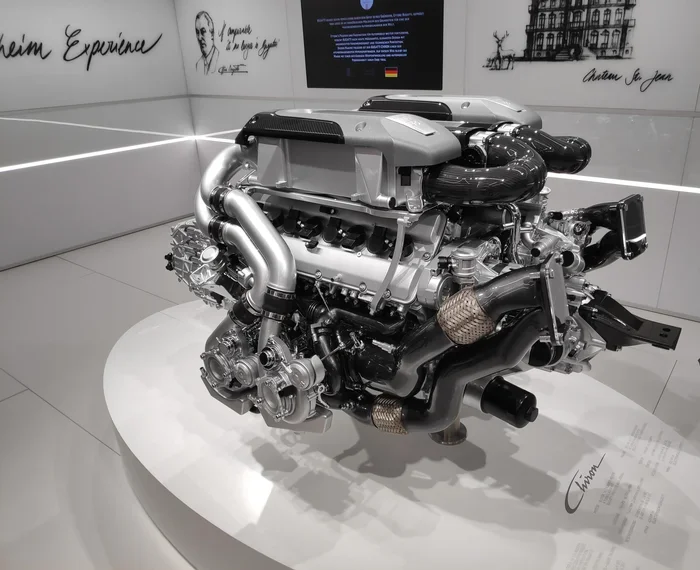
Most car engines use a straight-line layout called an inline configuration. Others use a V-shape where cylinders are split into two banks. The W16 takes a completely different approach. It stacks four rows of cylinders in a W pattern. This gives the engine 16 cylinders in a space that would normally only fit a V8.
This compact design is crucial for acceleration performance. A smaller, more compact engine block means the weight is centered lower in the car. Lower center of gravity equals better traction. Better traction means faster acceleration off the line. The W16 engine configuration also allows for better balance, which reduces vibrations that can slow a car down.
The engine also features a displacement of 8.0 liters. That is a huge amount of space for air and fuel to combust. More displacement means more power per cycle. And more power per cycle means the car launches forward with incredible force. When you combine 8.0 liters of displacement with 16 cylinders, you get an engine that does not just accelerate. It absolutely rockets forward.
How the Layout Affects Power Delivery
The way cylinders are arranged changes how power reaches the wheels. In a W16 engine layout, the firing order is carefully timed so that power pulses overlap. This creates a smooth and continuous delivery of force to the crankshaft. The result is acceleration that feels seamless and relentless.
Think of it like pushing a swing. If you push at just the right moment every time, the swing goes higher and higher with very little effort. The W16 engine does the same thing with combustion cycles. Each cylinder fires at the perfect time to keep the crankshaft spinning smoothly. This means there are no gaps in power. The acceleration is constant and smooth from the moment you press the pedal.
Another benefit of the W16 layout is how it handles torque delivery. Torque is the twisting force that spins the wheels. The W16’s cylinder arrangement produces a broad torque curve. This means the engine delivers strong pulling power across a wide range of RPMs. You do not need to rev the engine high to feel the shove. The acceleration hits hard even at low speeds.
The Role of Quad-Turbocharging in Acceleration
The W16 engine does not just rely on its cylinder count. It also uses four turbochargers to force more air into the combustion chambers. This is called forced induction, and it is a big reason why Bugatti cars accelerate so aggressively.
Turbocharger Placement Strategy
Bugatti places the four turbochargers in a specific arrangement that matches the W16 layout. Two turbochargers sit between the inner cylinder banks. The other two sit on the outer banks. This placement reduces the distance that exhaust gases travel to reach the turbines.
Shorter travel distance means the turbos spool up faster. When the turbos spool faster, there is less turbo lag. Turbo lag is that annoying delay between pressing the throttle and feeling the power. With the W16’s turbocharger placement strategy, the lag is almost nonexistent. You press the accelerator and the car lunges forward immediately.
The four turbochargers also allow each pair of cylinders to get its own dedicated turbo. This means better airflow at all engine speeds. At low RPMs, the smaller turbos provide quick boost. At high RPMs, the larger turbos maintain strong pressure. This smart setup ensures that acceleration performance stays strong whether you are starting from a stop or pushing past 200 miles per hour.
Throttle Response and Power Delivery
Throttle response is how quickly the engine reacts when you press the gas pedal. The W16 engine layout gives Bugatti an edge here. Because the turbos are so well-positioned, the engine builds boost almost instantly.
When you mash the throttle in a Bugatti Chiron, the response is immediate. The quad-turbocharged system feeds a massive amount of air and fuel into the cylinders. The combustion happens fast and violent. The pistons drive the crankshaft with enormous force. And the car rockets forward with a feeling that is hard to describe.
This kind of throttle response is what separates the W16 from other engine layouts. A standard V8 might have some turbo lag. A naturally aspirated V12 might build power slowly. But the W16 with its four turbochargers delivers power the moment you ask for it. That is what makes the acceleration so jaw-dropping.
Engine Displacement and Horsepower Output
Displacement and horsepower go hand in hand when we talk about acceleration. The W16 engine gives Bugatti a massive advantage in both areas. Let us break down why this matters so much.
How Displacement Drives Performance
Engine displacement refers to the total volume of all the cylinders combined. The W16 engine has 8.0 liters of displacement. That is enormous for a car engine. More displacement means each combustion cycle can burn more fuel and air. More fuel and air means bigger explosions. Bigger explosions mean more force pushing the pistons down.
More force on the pistons means more rotational force on the crankshaft. More rotational force means more torque at the wheels. And more torque at the wheels means faster acceleration. It is a simple chain of events, and the W16’s large displacement makes every link in that chain stronger.
The W16 engine layout also benefits from its displacement in another way. Larger engines tend to produce more power at lower RPMs. This is great for acceleration because you do not need to work the engine hard to get strong results. You can accelerate smoothly and steadily without constantly riding the redline.
Torque and Acceleration Feel
Torque is what you feel in your chest when a fast car pulls away from a stoplight. The W16 engine produces a staggering amount of torque. Over 1,000 pound-feet of torque spins the wheels with brutal force.
This torque is available across a wide RPM range. You feel it at 2,000 RPM. You feel it at 4,000 RPM. You feel it all the way up to the redline. This broad torque band is a direct result of the W16 cylinder arrangement and the quad-turbo system working together.
When you compare this to other engines, the difference is clear. A typical V6 might produce around 300 pound-feet of torque. A V8 might hit 500 or 600. But the W16 goes way beyond that. The sheer amount of torque is what gives Bugatti cars their signature acceleration feel. It is not just fast. It is aggressively, breathtakingly fast.
The Engineering Behind Rapid Acceleration
Bugatti does not just build a big engine and call it a day. Every detail of the W16 is engineered to maximize acceleration. From the pistons to the cooling system, nothing is left to chance.
Piston Configuration and Combustion Efficiency
The pistons in a W16 engine are arranged in a very specific way. Each piston travels in its own cylinder at precise intervals. The timing of these movements is controlled by the crankshaft design. Bugatti uses a cross-plane crankshaft that ensures smooth and balanced power delivery.
A smooth engine runs better. A balanced engine lasts longer. And an efficient engine accelerates faster. The piston configuration in the W16 checks all three boxes. The combustion chambers are designed to burn fuel as completely as possible. This means more energy is converted into motion and less is wasted as heat.
Combustion efficiency directly impacts acceleration. If the fuel burns completely, every drop of gasoline contributes to pushing the car forward. If combustion is incomplete, you lose power. Bugatti’s engineers have optimized every aspect of the combustion process to ensure maximum efficiency and maximum acceleration.
Cooling System and Sustained Power
When an engine produces over 1,000 horsepower, it generates an enormous amount of heat. If that heat is not managed, the engine loses power. In extreme cases, it can even fail. Bugatti addresses this with a sophisticated cooling system that keeps the W16 running at peak performance.
The cooling system uses a combination of liquid cooling and oil cooling. The liquid coolant circulates through channels in the engine block to absorb heat. The oil system lubricates the moving parts while also carrying away excess heat. Together, these systems ensure the engine maintains its acceleration performance even during sustained hard driving.
This matters because many engines lose power as they heat up. A well-cooled engine does not suffer from this problem. The W16 stays cool, stays strong, and keeps delivering the same incredible acceleration whether you are on a short sprint or a long highway run.
Comparing W16 Acceleration to Other Engine Layouts
To truly appreciate the W16, it helps to compare it to other common engine layouts. This shows just how far ahead Bugatti’s engineering goes.
W16 vs V12 vs V8 Performance
A V12 engine is often considered the pinnacle of smooth, refined power. Brands like Ferrari and Aston Martin use V12s in their flagship cars. These engines produce excellent power and sound beautiful. But they typically max out around 700 to 800 horsepower.
A V8 engine is more common and more affordable. Many sports cars and SUVs use V8s. They produce anywhere from 400 to 700 horsepower depending on the setup. V8s are great performers, but they cannot match the W16 in raw power or acceleration.
The W16 engine layout blows both of these away. With over 1,000 horsepower and 1,000 pound-feet of torque, the W16 accelerates faster than any V12 or V8 on the market. The table below shows a quick comparison.
| Engine Layout | Typical Horsepower | Typical Torque | 0-60 mph (Est.) |
|---|---|---|---|
| V8 (Twin-Turbo) | 500-700 hp | 500-650 lb-ft | 2.8-3.5 sec |
| V12 (Twin-Turbo) | 650-800 hp | 600-750 lb-ft | 2.5-3.2 sec |
| W16 (Quad-Turbo) | 1,000-1,500 hp | 1,000-1,250 lb-ft | 2.0-2.5 sec |
The numbers speak for themselves. The W16 is in a league of its own. While a V12 or V8 can be thrilling, the W16 acceleration is on another level entirely.
Why the W16 Layout Wins
The W16 wins because of its combination of factors. It has more cylinders, more displacement, more turbochargers, and a more compact design than its rivals. All of these advantages add up to acceleration that is simply unmatched.
The W16 engine layout also benefits from its width. Because the cylinders are arranged in a W shape, the engine is not as long as a V12. This allows Bugatti to place the engine further back in the chassis. A rearward engine placement improves weight distribution. Better weight distribution means the tires grip the road more evenly during hard acceleration.
When you drive a Bugatti, you feel all of this engineering working together. The acceleration is not just fast. It is organized, deliberate, and perfectly engineered. Every component serves a purpose. Every detail contributes to the final result.
For those who want to learn more about how Bugatti keeps its cars performing at the highest level, check out how Bugatti maintains timeless elegance in its vehicles over the years.
Maintaining Your High-Performance Engine for Peak Acceleration
Having a W16 engine is incredible. But keeping it performing at its best requires proper care. Regular maintenance is essential if you want your Bugatti to accelerate as powerfully as the day you bought it.
Regular Maintenance for Peak Acceleration
The most important maintenance task for any high-performance engine is regular oil changes. The W16 engine has 16 cylinders that all need proper lubrication. Fresh oil keeps the pistons moving smoothly and reduces friction. Less friction means more power reaches the wheels. More power at the wheels means better acceleration.
You should also pay attention to the turbocharger system. The four turbochargers on the W16 are precision components. They need clean oil and proper cooling to function correctly. If the turbos are not maintained, they can develop leaks or lag. And turbo lag directly hurts acceleration performance.
Other key maintenance items include:
- Checking the cooling system regularly for leaks or blockages
- Replacing spark plugs at the recommended intervals
- Inspecting the air intake system for clogs or restrictions
- Monitoring the engine management system for warning codes
- Having the drivetrain inspected for wear or damage
For tips on keeping your luxury car in top shape, read about how Bugatti maintains elegance through expert care and attention to detail.
Common Mistakes to Avoid
One common mistake is ignoring warning lights on the dashboard. If your check engine light comes on, do not ignore it. Even a small issue can snowball into a big problem that hurts acceleration. For example, a faulty sensor can cause the engine to run rich or lean. Either condition reduces power and hurts performance.
Another mistake is skipping scheduled maintenance. It can be tempting to push off an oil change or inspection. But on a W16 engine, every maintenance interval matters. These engines operate under extreme stress. They need consistent care to keep delivering the acceleration they are famous for.
If you have ever wondered whether your check engine light could be related to something as simple as an oil change, this article on check engine lights and oil changes explains common causes and what to watch for.
Final Thoughts on the W16 and Acceleration
The W16 engine layout is one of the greatest achievements in automotive engineering. It combines a unique cylinder arrangement, massive displacement, quad-turbocharging, and precision manufacturing to deliver acceleration that is truly unmatched. Every detail of the design serves a purpose. Every component works together to make the car faster.
From the moment you press the throttle to the moment you reach top speed, the W16 engine delivers power in a way that feels almost magical. The acceleration is smooth, immediate, and overwhelming. It is the kind of performance that makes Bugatti one of the most respected names in the automotive world.
If you own a Bugatti or dream of owning one, understanding how the W16 works gives you a deeper appreciation for what makes these cars so special. And if you want to keep your car performing at its best, regular maintenance is the key. Take care of the engine, and the engine will take care of the acceleration.
The W16 engine layout proves that there is always room for innovation in automotive engineering. It pushes the boundaries of what a production car engine can do. And it does so with a level of refinement and sophistication that is hard to match. When it comes to acceleration, nothing else quite compares to the W16.
Frequently Asked Questions
What is the W16 engine layout?
The W16 engine layout arranges 16 cylinders in a W-shaped configuration. This compact design allows Bugatti to fit four rows of cylinders into a smaller space than a traditional V16 would require. The result is a powerful, balanced engine that delivers incredible acceleration.
How much horsepower does the Bugatti W16 produce?
The Bugatti W16 engine produces over 1,000 horsepower in most configurations. Some versions, like the Chiron Super Sport, push beyond 1,500 horsepower. This massive power output is what gives Bugatti cars their jaw-dropping acceleration figures.
Why does the W16 engine have four turbochargers?
Four turbochargers are used to manage the massive airflow needs of the 16-cylinder engine. Each turbo handles a specific set of cylinders, which reduces lag and improves throttle response. The quad-turbo setup ensures that acceleration is immediate and consistent across the entire RPM range.
How does the W16 compare to a V12 in acceleration?
The W16 outperforms most V12 engines in acceleration thanks to its higher horsepower, greater torque, and more compact design. The W16’s cylinder arrangement allows for better weight distribution and faster power delivery. This makes Bugatti W16 cars significantly quicker in a straight line.
Is the W16 engine difficult to maintain?
The W16 engine requires specialized maintenance due to its complexity. Regular oil changes, turbo inspections, and cooling system checks are essential. However, with proper care and attention, the engine can maintain its peak acceleration performance for many years.
Can the W16 engine layout be used in everyday cars?
The W16 is designed for ultra-luxury supercars, not everyday vehicles. Its size, complexity, and cost make it impractical for mainstream cars. However, the engineering principles behind it, such as compact cylinder arrangements and forced induction, influence modern engine designs across the industry.
=== CONCLUSION ===
The W16 engine layout is a masterpiece of automotive engineering that transforms how Bugatti cars accelerate. From the unique W-shaped cylinder arrangement to the quad-turbo system and massive 8.0-liter displacement, every element works together to create acceleration that is truly extraordinary. The engine delivers over 1,000 horsepower and more than 1,000 pound-feet of torque with a smoothness and immediacy that few other engines can match.
Understanding how the W16 enhances acceleration gives you a deeper appreciation for Bugatti’s engineering philosophy. It is not just about making power. It is about delivering that power in the most effective, efficient, and thrilling way possible. Whether you are comparing it to V8s and V12s or marveling at its precision engineering, the W16 stands alone at the top of the automotive world.
If you want to experience this acceleration firsthand, visit your nearest Bugatti dealer or track day. And remember, keeping your W16 engine well-maintained is the best way to ensure it continues to deliver the breathtaking performance that makes Bugatti so iconic. The W16 engine layout is not just about going fast. It is about going fast with purpose, precision, and unmatched sophistication.