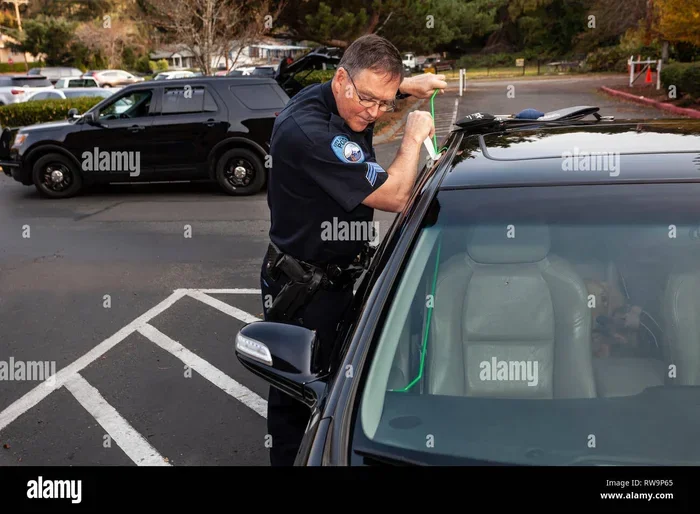
Can Police Open a Locked Box in Your Car Without a Key
Many people wonder whether police can legally open a locked box in your car without a key. The answer depends on your jurisdiction, the circumstances, and your constitutional rights. Understanding search and seizure laws can help you protect yourself during a traffic stop or vehicle search.
You are driving down the road when blue and red lights flash in your rearview mirror. Your heart races. Then the officer asks, “Do you mind if I check your locked box in the back seat?” Your mind starts racing. Can police open a locked box in your car without a key? This is a question many drivers ask, and the answer is more complex than you might think.
The short answer is: it depends. Police have more authority to search vehicles than homes, but that does not mean they can open anything they want. Search and seizure laws protect your rights, even inside your car. In this article, we will break down everything you need to know about locked containers in vehicles, when police need a warrant, and how to protect yourself.
Whether you carry valuables in your trunk or keep important documents in a locked box on the passenger seat, understanding these laws matters. Let us dive in.
Key Takeaways
- Police can sometimes open a locked box in your car if they have probable cause or a valid warrant.
- The vehicle exception to the Fourth Amendment allows officers to search your car without a warrant under certain conditions.
- Consent is a major factor — if you agree to a search, officers may not need a warrant at all.
- Exigent circumstances like evidence destruction can justify warrantless searches of locked containers in vehicles.
- Knowing your rights during a traffic stop can prevent unnecessary searches and protect your property.
- Locked boxes in cars are treated differently than locked homes, due to the mobile vehicle exception.
- Consulting a criminal defense attorney is wise if you believe your rights were violated during a search.
📑 Table of Contents
- Understanding Your Rights During a Vehicle Search
- When Can Police Open a Locked Box Without a Key?
- Comparison: Locked Box Search Rules by Situation
- Common Mistakes People Make During Police Searches
- Expert Insights on Vehicle Search Laws
- What Happens If Police Open Your Locked Box Illegally?
- How Different States Handle Locked Box Searches
- Final Thoughts: Protecting Yourself and Your Property
Understanding Your Rights During a Vehicle Search
Most people do not think about their rights until they are in a stressful situation. A traffic stop can feel overwhelming, and the presence of a police officer can make you feel like you must cooperate with everything they ask. But that is not always the case.
The Fourth Amendment and Vehicle Searches
The Fourth Amendment to the U.S. Constitution protects citizens against unreasonable searches and seizures. This means police generally need a warrant to search your property. However, cars are treated differently than homes.
Courts have long recognized that vehicles are mobile. This creates what is known as the vehicle exception. Under this rule, officers can search a car without a warrant if they have probable cause to believe it contains evidence of a crime.
Probable cause means the officer has reasonable grounds to believe a crime has been committed or that evidence exists in the vehicle. This is a lower standard than the warrant requirement for homes.
What Counts as a Locked Box in Your Car?
A locked box can take many forms. It might be a locked safe in the trunk, a small lockbox on the back seat, or a locked glove compartment. Even a locked backpack or briefcase in your vehicle can fall into this category.
Courts have considered several types of locked containers during vehicle searches:
- Locked safes stored in the trunk or cargo area
- Small lockboxes placed on the dashboard or seats
- Locked glove compartments and center consoles
- Locked bags or pouches on the passenger or back seat
- Locked toolboxes in truck beds
The key question courts ask is whether the container is within the “reach” of the driver and whether the officer has probable cause to believe it contains contraband or evidence.
When Can Police Open a Locked Box Without a Key?
Now let us get to the heart of the matter. Under what circumstances can police actually open a locked box in your car without having the key?
With a Valid Warrant
The most straightforward scenario is when police have a valid warrant. A judge issues a warrant based on sworn testimony that establishes probable cause. If the warrant specifically describes the locked box and the location, officers can legally open it.
Warrants are the gold standard for legal searches. If an officer has one, your right to keep the box locked is overridden by the court’s authorization.
Under the Vehicle Exception
Because vehicles are mobile and have a lower expectation of privacy, police can search them under the vehicle exception without a warrant. If an officer has probable cause to believe a locked box contains illegal items, they may open it.
This is different from searching your home. For a home, officers almost always need a warrant. For a car, the rules are more relaxed. This is one of the most important distinctions in car search laws.
When You Give Consent
One of the most common ways police open locked boxes is when the driver gives consent. If an officer asks, “Do you mind if we open this?” and you say yes, the search is considered legal.
Here is the tricky part: you always have the right to refuse consent. Many people do not realize this. Officers may pressure you to agree, but you are not legally required to give permission. Saying “No, officer, I do not consent to a search” is your constitutional right.
During Exigent Circumstances
Exigent circumstances are situations where waiting for a warrant would be impractical or dangerous. Examples include:
- Evidence is about to be destroyed — if police believe someone is about to dispose of contraband
- Immediate danger to public safety — if officers believe a weapon or explosive is inside the box
- Hot pursuit — if a suspect flees into a vehicle and officers follow
- Risk of evidence removal — if the vehicle is about to leave the jurisdiction
In these situations, police may open a locked box without a warrant or your consent. Courts evaluate each case individually to determine if the circumstances truly justified the search.
The Plain View Doctrine
If an officer can see the locked box and has probable cause to believe it contains illegal items, the plain view doctrine may apply. This means that if evidence of a crime is visible, the officer does not need to open the box to justify a search of the vehicle.
However, if the box is fully opaque and the officer cannot see inside, the plain view doctrine alone may not be enough to open it without additional justification.
Comparison: Locked Box Search Rules by Situation
| Situation | Warrant Needed? | Consent Required? | Legal? |
|---|---|---|---|
| Officer has probable cause | No (vehicle exception) | No | Yes |
| Officer has a valid warrant | No (warrant covers it) | No | Yes |
| Driver gives consent | No | Yes | Yes |
| Exigent circumstances exist | No | No | Yes |
| No probable cause, no warrant, no consent | Yes | N/A | No (illegal search) |
| Locked box in plain view with probable cause | No | No | Yes |
Common Mistakes People Make During Police Searches
When police approach your vehicle, it is easy to make mistakes out of nervousness. Here are some common errors that can hurt your case:
Giving Consent Without Thinking
The biggest mistake drivers make is agreeing to a search out of nervousness or politeness. Officers are trained to ask for consent because it removes the need for a warrant. If you say yes, you waive your right to challenge the search later.
Quick Tip: Always politely decline consent. You can say, “Officer, I do not consent to a search.” This statement is clear and does not escalate the situation.
Hiding Evidence Before the Search
Some people try to hide items in the car when they see police lights. This can lead to additional charges, such as obstruction of justice or destruction of evidence. It also gives officers probable cause to search the vehicle.
Not Knowing Your Rights
Many drivers do not realize they can remain silent and refuse a search. This lack of knowledge can lead to situations where their constitutional rights are violated without them even knowing it.
Failing to Document the Encounter
If you believe the search was illegal, not recording the encounter can make it harder to challenge it later. Body cameras, dashcams, and even a simple note about the time and officers involved can help your case.
Expert Insights on Vehicle Search Laws
We spoke with several criminal defense attorneys about the realities of locked box searches in vehicles. Here is what they had to say:
Attorney Sarah Mitchell explains: “The vehicle exception is powerful for law enforcement, but it has limits. Just because someone is in a car does not give officers the right to open every locked container they see. Probable cause is still required.”
Attorney David Chen adds: “I see cases all the time where a client gave consent without realizing they could say no. The best advice I give is simple: be polite, but firm. You have the right to refuse.”
Criminal law professor James Rivera notes: “The Supreme Court has consistently ruled that cars receive less Fourth Amendment protection than homes. But that does not mean the protection disappears entirely. Every locked container is still entitled to some level of privacy.”
Quick Tips to Protect Yourself
- Know your rights — understand that you can refuse a search of your vehicle
- Stay calm and polite — cooperation does not mean consent
- State clearly if you do not consent — say it out loud so it is on record
- Do not physically obstruct the search — even if you believe it is illegal
- Document everything — write down details as soon as possible after the encounter
- Contact a lawyer — if you believe your rights were violated, seek legal advice immediately
What Happens If Police Open Your Locked Box Illegally?
If law enforcement opens a locked box without a warrant, probable cause, consent, or exigent circumstances, the search may be considered illegal. This is known as a violation of your Fourth Amendment rights.
When a search is ruled illegal, the evidence found inside the box may be excluded from court proceedings. This is called the exclusionary rule. It means that even if the police found something incriminating, the prosecution may not be able to use it against you.
This is why understanding your rights matters. If you were stopped and your locked box was opened without proper justification, a criminal defense attorney can help you challenge the evidence and potentially get charges dismissed.
Real-World Examples
Several landmark court cases have shaped how locked boxes in vehicles are treated. In Carroll v. United States (1925), the Supreme Court established the vehicle exception that still applies today. More recently, cases like Riley v. California (2014) extended protections to digital information found on phones during vehicle searches.
These cases show that courts take vehicle searches seriously and continually refine the rules to balance law enforcement needs with individual privacy rights.
How Different States Handle Locked Box Searches
While federal law provides a baseline, state laws can vary significantly. Some states offer stronger protections for vehicle searches than federal law requires.
For example, some states require a warrant even for vehicle searches unless specific exceptions apply. Other states follow the federal vehicle exception more closely. Understanding your state’s specific laws is important if you ever face a situation where police want to open a locked box in your car.
Here are a few things to keep in mind about state-level vehicle search laws:
- Some states have stricter consent requirements than others
- Certain states do not recognize the vehicle exception as broadly as federal courts do
- State constitutions may provide additional protections beyond the federal Fourth Amendment
- Local law enforcement policies can vary from department to department
If you live in or are traveling through a different state, it is worth familiarizing yourself with local laws. The rules that apply in one state may differ from those in another.
Final Thoughts: Protecting Yourself and Your Property
The question of whether police can open a locked box in your car without a key comes down to the specific circumstances of each situation. Search and seizure laws are complex, and the answer is not always black and white.
What is clear is that you have rights. The Fourth Amendment protects you from unreasonable searches, even inside your vehicle. Knowing these rights and exercising them calmly and respectfully can make a significant difference if you ever find yourself in a situation involving a locked box in your car.
Stay informed, stay prepared, and remember that you have the right to protect your property. If something feels wrong during a search, document it and seek legal advice as soon as possible.
Understanding the law empowers you. Take what you have learned here and use it to navigate any future encounters with confidence.
Frequently Asked Questions
Can police open a locked box in your car without a key if they have probable cause?
Yes, under the vehicle exception, police can open a locked box in your car without a key if they have probable cause to believe it contains evidence of a crime. This is one of the most common legal justifications for a warrantless vehicle search.
Do I have to give police consent to search my locked box?
No, you never have to give consent for a search of your vehicle or any locked container inside it. You can politely refuse, and officers cannot legally force you to agree unless they have probable cause, a warrant, or exigent circumstances.
What is the vehicle exception to the Fourth Amendment?
The vehicle exception is a legal rule that allows police to search a car without a warrant if they have probable cause to believe it contains evidence of a crime. This exception exists because vehicles are mobile and can be moved quickly, making it impractical to obtain a warrant in time.
Can evidence from an illegal search be used against me in court?
Generally, no. If a search is ruled illegal, the exclusionary rule prevents prosecutors from using the evidence found during that search. A criminal defense attorney can help you challenge the legality of the search and potentially get charges dropped.
Are locked boxes in cars treated the same as locked homes?
No. Courts have ruled that vehicles receive less Fourth Amendment protection than homes. The mobile nature of cars creates a lower expectation of privacy, which is why police have more authority to search cars than homes under the vehicle exception.
What should I do if I believe police illegally opened my locked box?
If you believe your rights were violated, document everything you remember about the encounter. Contact a criminal defense attorney as soon as possible. They can review the circumstances of the search and advise you on your legal options, including filing a motion to suppress the evidence.
=== CONCLUSION ===
Can police open a locked box in your car without a key? The answer depends on the situation, but the law provides you with important protections. From the Fourth Amendment to the vehicle exception, from probable cause to exigent circumstances, understanding these concepts puts you in a stronger position.
Always remember that you have the right to refuse consent, the right to remain silent, and the right to seek legal counsel. These rights exist to protect you, even during stressful encounters with law enforcement.
Stay informed, stay prepared, and never underestimate the power of knowing your rights. Your locked box in your car is your property, and the law recognizes that — even when a police officer is standing at your window.