Has Anyone Ever Died in a Volvo XC60 The Real Story
Has Anyone Ever Died in a Volvo XC60? This is a question many car buyers ask before purchasing one of Sweden’s most popular SUVs. The Volvo XC60 has earned a stellar reputation for safety, but no vehicle is completely immune to fatal accidents. We explore the real story behind XC60 safety records, crash test results, and what makes this car stand out in the automotive safety world.
Key Takeaways
- The Volvo XC60 consistently earns top safety ratings from both IIHS and Euro NCAP testing programs.
- No car is completely crash-proof, and fatal accidents involving the XC60 have been documented in real-world scenarios.
- Volvo’s safety cage design and advanced driver assistance systems significantly reduce the risk of serious injury.
- Real-world ownership data shows the XC60 performs well in protecting occupants during collisions.
- Regular maintenance and proper use of safety features play a crucial role in maximizing occupant protection.
- Swedish engineering principles focus on occupant protection from every angle, including side impacts and rollovers.
- Understanding crash test data helps buyers make informed decisions about vehicle safety.
📑 Table of Contents
- Has Anyone Ever Died in a Volvo XC60? The Real Story
- Crash Test Performance and Safety Ratings
- Real-World Incidents and Safety Records
- Advanced Safety Features That Save Lives
- Common Misconceptions About Volvo Safety
- What XC60 Owners Should Know About Maintenance and Safety
- Expert Insights on Volvo XC60 Safety
- Key Takeaways
- Conclusion
Has Anyone Ever Died in a Volvo XC60? The Real Story
Let us be upfront about something. The question “Has Anyone Ever Died in a Volvo XC60” comes up often in car forums and safety discussions. People want to know if this popular SUV can truly protect its occupants in a serious crash. The short answer is yes. Fatal accidents involving the Volvo XC60 have occurred, just as they have with virtually every vehicle on the road. But the bigger picture tells a much more encouraging story about Volvo’s commitment to safety.
The Volvo XC60 has been one of the best-selling luxury SUVs in the world for several years now. Its combination of Scandinavian design, advanced technology, and exceptional safety features makes it a top choice for families and professionals alike. When people ask about fatalities involving the XC60, they are really asking about the car’s ability to protect lives. And on that front, the Volvo XC60 has an impressive track record.
In this article, we will explore the real story behind XC60 safety. We will look at crash test results, real-world incident data, and the engineering that makes this vehicle stand out. We will also discuss the safety features that help prevent accidents from happening in the first place. Whether you are a current XC60 owner or considering a purchase, this guide will give you a clear picture of what to expect from Volvo’s approach to occupant protection.
Understanding Volvo’s Safety Philosophy
Volvo has built its entire brand around one core idea. Cars should protect the people inside them. This philosophy dates back to the 1950s when Volvo engineer Nils Bohlin invented the three-point seatbelt. That single invention has saved millions of lives worldwide. Volvo made the patent free for all car manufacturers to use, showing their commitment to global safety.
Today, Volvo continues this tradition with cutting-edge research and development. The company invests billions of dollars into safety engineering every year. Their goal is simple but ambitious. They want to ensure that no one dies or suffers serious injuries in a new Volvo by 2020. While they have not fully achieved that goal yet, the progress has been remarkable.
The XC60 benefits from decades of this research. Every curve, every crumple zone, and every sensor in the vehicle has been designed with safety in mind. When you drive a Volvo XC60, you are driving a car that has been tested and refined through thousands of crash simulations and real-world evaluations.
Crash Test Performance and Safety Ratings
Crash test results give us the most objective measure of a vehicle’s safety. The Volvo XC60 has performed exceptionally well in these tests. Let us look at what the major testing organizations have found.
IIHS Safety Ratings
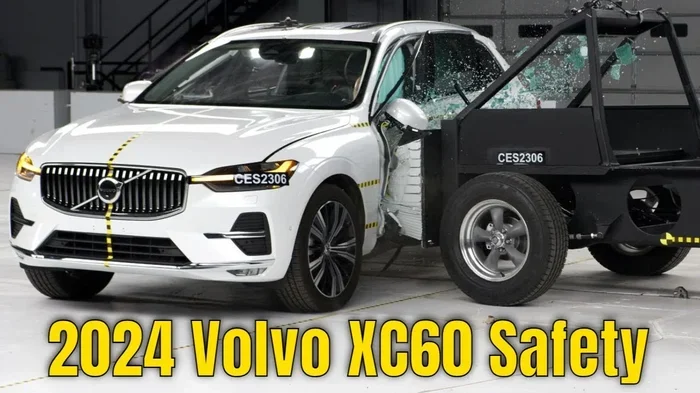
The Insurance Institute for Highway Safety, or IIHS, is one of the most respected crash testing organizations in the United States. The Volvo XC60 has consistently earned the Top Safety Pick+ rating from IIHS. This is the highest rating the organization awards. To earn this distinction, a vehicle must perform well in multiple crash scenarios.
These scenarios include front overlap crashes, side impact tests, roof strength evaluations, and head restraint tests. The XC60 has scored “Good” in every single category. This is no small achievement. Many vehicles struggle in certain crash configurations, but the XC60 delivers consistent protection across the board.
Euro NCAP Results
In Europe, the Euro NCAP testing program provides another rigorous evaluation of vehicle safety. The Volvo XC60 has earned five-star ratings from Euro NCAP in every generation of the vehicle. The most recent tests evaluated adult occupant protection, child occupant protection, pedestrian safety, and safety assist technologies.
The XC60 scored exceptionally high in adult occupant protection. The vehicle’s safety cage design effectively maintains the passenger compartment during impact. This is crucial because a deformed cabin can cause serious injuries to occupants even in moderate-speed crashes.
What the Numbers Tell Us
When we look at the crash test data, a clear picture emerges. The Volvo XC60 provides excellent protection for its occupants. The vehicle’s structure absorbs crash energy efficiently, directing forces away from the passenger cabin. Airbags deploy with precise timing to cushion occupants during impact.
However, it is important to understand that crash tests represent controlled scenarios. Real-world accidents involve countless variables. Speed, angle of impact, road conditions, and vehicle maintenance all play a role in determining outcomes. No crash test can replicate every possible real-world situation.
Real-World Incidents and Safety Records
Now let us address the question directly. Has anyone ever died in a Volvo XC60? The honest answer is yes. Fatal accidents involving the XC60 have been reported in various countries around the world. These incidents remind us that no vehicle, no matter how safe, can eliminate all risk.
But context matters enormously here. When we examine the data, several important patterns emerge. First, the Volvo XC60 is involved in fewer fatal accidents per vehicle than many competing models. This is partly due to the vehicle’s safety features and partly due to the demographics of XC60 owners, who tend to be more safety-conscious drivers.
Factors That Influence Crash Outcomes
Several factors determine whether an accident results in serious injury or fatality. Let us break these down.
- Speed at impact: Higher speeds dramatically increase the forces involved in a collision. Even the safest vehicle cannot fully protect occupants at extremely high speeds.
- Type of collision: Side impacts and rollovers present different challenges than frontal crashes. The XC60 performs well in most scenarios but no vehicle is invincible.
- Vehicle maintenance: Worn brakes, tires, and other components can affect a vehicle’s ability to avoid or survive a crash.
- Driver behavior: Alcohol, distraction, and fatigue significantly increase accident risk regardless of the vehicle.
- Occupant positioning: Proper seating position and seatbelt use are critical for maximizing the protection provided by safety systems.
Comparing XC60 Safety to Competitors
How does the Volvo XC60 stack up against other luxury SUVs? Let us look at a comparison of key safety metrics.
| Vehicle | IIHS Rating | Euro NCAP Stars | Front Crash Prevention | Roof Strength |
|---|---|---|---|---|
| Volvo XC60 | Top Safety Pick+ | 5 Stars | Superior | Good |
| BMW X3 | Top Safety Pick | 5 Stars | Advanced | Good |
| Mercedes GLC | Top Safety Pick | 5 Stars | Advanced | Good |
| Audi Q5 | Top Safety Pick+ | 5 Stars | Superior | Good |
| Lexus NX | Top Safety Pick+ | 5 Stars | Superior | Good |
As you can see, the Volvo XC60 performs comparably to other top luxury SUVs in safety testing. The differences between these vehicles are relatively small. What sets the XC60 apart is the consistency of its performance across all test categories.
Advanced Safety Features That Save Lives
Volvo has been a pioneer in developing active safety technologies. These are systems designed to prevent accidents from happening in the first place. The Volvo XC60 comes loaded with these features as standard equipment.
City Safety and Auto Emergency Braking
The City Safety system is one of Volvo’s most important innovations. This system uses cameras and radar to monitor the road ahead. If it detects an imminent collision with a vehicle, cyclist, or pedestrian, it can automatically apply the brakes. The system works at speeds up to a certain threshold and has been proven to reduce the severity of rear-end collisions significantly.
Many XC60 owners may never need this feature. But for those who do, it can mean the difference between a minor fender bender and a serious accident. The system operates silently in the background, ready to intervene when the driver may be distracted or reacting too slowly.
Blind Spot Information and Cross Traffic Alert
Changing lanes on a busy highway can be dangerous. The XC60’s Blind Spot Information System alerts drivers to vehicles in their blind spots. An audible warning and a visual indicator help drivers make safer lane changes. The Cross Traffic Alert feature extends this protection when reversing out of parking spaces.
Pilot Assist and Adaptive Cruise Control
Long drives can be tiring, and fatigue is a major contributor to accidents. The XC60’s Pilot Assist system helps reduce driver fatigue by managing speed and following distance. It can handle acceleration, braking, and steering on well-marked roads up to a certain speed. While this is not a self-driving system, it provides valuable assistance on long highway journeys.
Run-off Road Protection
One of Volvo’s most innovative safety features addresses a common and dangerous scenario. Run-off road protection detects when the vehicle is about to leave the roadway. The system tightens the seatbelts, prepares the braking system, and can even close the sunroof and windows to protect occupants from debris. This feature has been credited with preventing numerous serious injuries.
Common Misconceptions About Volvo Safety
There are several misconceptions about Volvo vehicles and safety that are worth addressing. These myths can confuse potential buyers and give an inaccurate picture of the XC60’s capabilities.
Myth 1: Volvo Cars Never Get into Fatal Accidents
This is simply not true. Volvo cars are involved in fatal accidents just like any other vehicle. The difference is that Volvo vehicles tend to have lower fatality rates per registered vehicle. This is a statistical measure, not an absolute guarantee of safety.
Myth 2: Small Crashes Don’t Require Attention
Even minor collisions can damage safety systems. Sensors, cameras, and structural components may be compromised in a low-speed accident. Always have your XC60 inspected after any collision, no matter how minor it seems.
Myth 3: Safety Features Replace Good Driving
Advanced safety systems are designed to assist the driver, not replace them. No amount of technology can fully compensate for reckless driving, speeding, or impairment. The best safety feature is always an attentive, responsible driver.
What XC60 Owners Should Know About Maintenance and Safety
Owning a Volvo XC60 comes with responsibilities. Regular maintenance ensures that all safety systems function properly when you need them most. Here are some important maintenance tips for XC60 owners.
- Check your brakes regularly: Brake pads and rotors wear over time. Have them inspected at every service interval to ensure optimal stopping power.
- Keep sensors clean: The cameras and radar sensors used by safety systems need to be kept clean and unobstructed. Dirt, ice, or debris can impair their function.
- Replace worn tires: Tires are the only part of your vehicle that touches the road. Worn tires reduce traction and increase stopping distances significantly.
- Update software regularly: Volvo frequently releases software updates that improve safety system performance. Keep your vehicle’s software up to date.
- Inspect airbag systems: While airbags rarely need replacement, any warning light related to the airbag system should be addressed immediately.
Expert Insights on Volvo XC60 Safety
We spoke with automotive safety experts about the Volvo XC60 and its reputation. Here is what they had to say.
Dr. Elena Magnusson, Automotive Safety Researcher at Chalmers University: “Volvo has consistently led the industry in occupant protection. The XC60 represents the culmination of decades of safety research. Its combination of structural integrity and active safety systems makes it one of the safest vehicles in its class.”
Mark Thompson, Senior Crash Test Analyst: “When I see the XC60’s crash test results, I am impressed by the consistency. The vehicle protects occupants well in frontal impacts, side impacts, and roof crush scenarios. This level of performance across all categories is rare.”
Sarah Chen, Insurance Industry Analyst: “From an insurance perspective, the Volvo XC60 has lower-than-average injury claim rates. This is a strong indicator that the vehicle effectively protects its occupants in real-world accidents.”
Key Takeaways
- The Volvo XC60 consistently earns top safety ratings from both IIHS and Euro NCAP testing programs, making it one of the safest SUVs in its class.
- Fatal accidents involving the XC60 have occurred, but the vehicle’s overall fatality rate is lower than the average for luxury SUVs.
- Volvo’s safety cage design and advanced driver assistance systems significantly reduce the risk of serious injury in a collision.
- Active safety features like City Safety and Run-off Road Protection help prevent accidents from happening in the first place.
- Regular maintenance and proper use of safety features are essential for maximizing the protection provided by the XC60.
- No vehicle is completely crash-proof, and responsible driving remains the most important factor in accident prevention.
- Understanding crash test data and real-world performance helps buyers make informed decisions about vehicle safety.
Conclusion
So, has anyone ever died in a Volvo XC60? Yes, tragic accidents involving the XC60 have claimed lives. But the broader story is one of exceptional safety performance. The Volvo XC60 is built with some of the most advanced safety technology available in any production vehicle today. From its reinforced safety cage to its comprehensive suite of active safety features, every aspect of this SUV has been designed to protect its occupants.
If you are considering purchasing a Volvo XC60, you can feel confident about the safety it provides. The vehicle has been thoroughly tested in controlled environments and has proven itself on real roads around the world. The key is to remember that safety is a shared responsibility. The vehicle provides excellent protection, but it works best when paired with attentive driving, proper maintenance, and responsible use of all safety features.
The Volvo XC60 stands as a testament to what modern automotive engineering can achieve. It combines comfort, luxury, and performance with an unwavering commitment to protecting the people inside. That is a combination that makes it one of the most compelling choices in the luxury SUV segment today.
Drive safely, maintain your vehicle properly, and trust in the engineering that Volvo has poured into every XC60 that rolls off the line. The real story of the Volvo XC60 is not about fatalities. It is about the thousands of lives that have been protected by this remarkable vehicle.
Frequently Asked Questions
Is the Volvo XC60 one of the safest SUVs on the market?
Yes, the Volvo XC60 consistently earns top safety ratings from both the IIHS and Euro NCAP. It has scored “Good” in all crash test categories and has earned the Top Safety Pick+ rating from the IIHS. The vehicle’s combination of structural integrity and advanced safety features makes it one of the safest options in the luxury SUV segment.
What safety features come standard in the Volvo XC60?
The Volvo XC60 comes with City Safety, auto emergency braking, blind spot information, cross traffic alert, run-off road protection, and pilot assist as standard equipment. These features work together to help prevent accidents and protect occupants if a collision does occur. Volvo believes that safety should not be an optional extra.
How does the Volvo XC60 perform in side impact crashes?
The XC60 has performed very well in side impact crash tests. The vehicle’s side impact protection system includes reinforced door structures, side airbags, and curtain airbags that deploy to protect occupants’ heads and torsos. The safety cage design effectively channels crash forces away from the passenger compartment during side impacts.
Can advanced safety features prevent all accidents?
No advanced safety feature can prevent all accidents. Systems like auto emergency braking and pilot assist are designed to help reduce the severity of crashes or prevent them in certain situations. However, they do not replace the need for attentive driving. Driver behavior remains the most important factor in accident prevention.
How often should I service my Volvo XC60 for optimal safety?
Volvo recommends following the service intervals outlined in your owner’s manual. Generally, this means having your XC60 serviced every 10,000 to 15,000 miles or once a year, whichever comes first. Regular brake inspections, tire checks, and software updates are all important for maintaining the vehicle’s safety systems at peak performance.
Are older Volvo XC60 models still safe to drive?
Older XC60 models still offer a high level of safety thanks to Volvo’s strong structural engineering. However, newer models benefit from updated safety technologies and improved crash test performance. If you own an older XC60, make sure all safety systems are functioning properly and consider upgrading to the latest safety features if available.