How Bugattis Quad-Turbo Tech Achieves Unmatched Speed
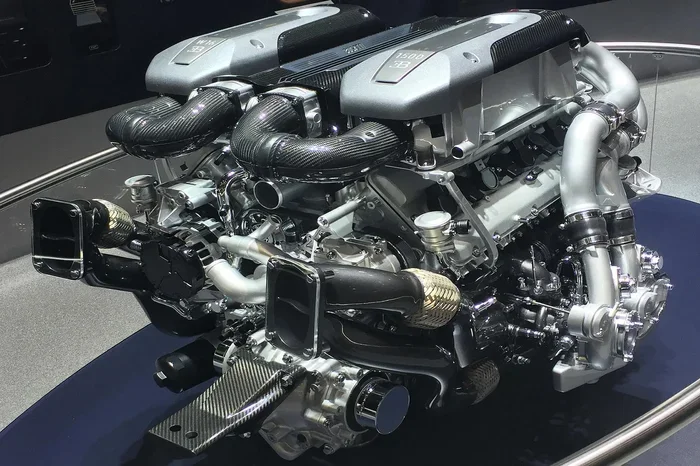
Bugatti’s quad-turbo technology represents the pinnacle of automotive engineering. The W16 engine with four turbochargers produces over 1,500 horsepower and mind-bending acceleration. This system forces massive amounts of air into the engine for incredible combustion efficiency. Understanding how Bugatti achieves such extreme speeds reveals fascinating engineering secrets.
Key Takeaways
- Quad-Turbo System: Four turbochargers work together to deliver massive power and smooth acceleration across all RPM ranges.
- W16 Engine Architecture: The unique 16-cylinder layout provides the foundation for Bugatti’s extraordinary performance.
- Advanced Materials: Lightweight yet incredibly strong materials keep the car fast while maintaining structural integrity.
- Aerodynamic Design: Every curve and vent serves a purpose in reducing drag and increasing downforce at top speeds.
- Thermal Management: Sophisticated cooling systems keep the engine running optimally even under extreme stress.
- Power Delivery: The transmission and drivetrain transfer all that power to the road with incredible precision.
📑 Table of Contents
- How Bugatti’s Quad-Turbo Tech Achieves Unmatched Speed
- The W16 Engine: The Heart of the Beast
- Understanding the Quad-Turbo System
- Materials and Engineering: Built for Speed
- Aerodynamics: Cutting Through the Air
- Power Delivery: From Engine to Road
- Thermal Management: Keeping Cool Under Pressure
- Real-World Performance: What the Numbers Say
- Maintaining Your Bugatti for Peak Performance
- Conclusion
How Bugatti’s Quad-Turbo Tech Achieves Unmatched Speed
Bugatti has built some of the fastest cars ever made. The secret behind their incredible performance lies in a quad-turbo system that pushes engineering boundaries. When you hear a Bugatti roar to life, you are hearing four turbochargers working in perfect harmony.
The quad-turbo engine is not just about raw power. It is about delivering that power smoothly and consistently. Whether you are cruising on the highway or pushing the car to its top speed, the system adapts. This technology sets Bugatti apart from every other hypercar manufacturer on the planet.
In this article, we will break down exactly how Bugatti’s quad-turbo tech works. You will learn about the engine architecture, the materials used, and the clever engineering tricks that make these cars so fast. Whether you are a car enthusiast or just curious about speed, this guide has something for you.
The W16 Engine: The Heart of the Beast
Every great supercar engine starts with a strong foundation. For Bugatti, that foundation is the W16 engine. This unique engine layout is unlike anything else in the automotive world. It combines two V8 engines into one massive powerplant.
Why 16 Cylinders?
A standard car engine has four or six cylinders. Bugatti went way beyond that. The W16 configuration uses 16 cylinders arranged in a W shape. This design fits more cylinders into a compact space. More cylinders mean more power strokes per revolution. The result is an engine that produces staggering amounts of horsepower and torque.
The W16 engine displaces 8.0 liters. That is a huge amount of space for air and fuel to mix. But size alone does not explain Bugatti’s speed. The real magic happens when you add four turbochargers to the mix.
Each cylinder bank gets its own turbocharger. This means the engine has forced induction across all eight banks. The result is incredible power delivery from low RPM all the way to the redline. You get smooth, linear acceleration that feels almost effortless.
How the W16 Layout Works
Think of the W16 as two V8 engines sharing the same crankshaft. Each V8 has its own cylinder head and valvetrain. But they work together as one unified engine. This shared architecture reduces weight and complexity compared to running two separate engines.
The combustion efficiency of the W16 is remarkable. Each cylinder is small and efficient. Yet together, they produce over 1,500 horsepower in the Bugatti Chiron. This is the kind of power that makes a car go from 0 to 60 mph in under 2.5 seconds.
Understanding the Quad-Turbo System
The quad-turbo setup is what makes Bugatti’s engine truly special. Most high-performance cars use twin turbochargers. Bugatti went a step further with four. Each turbocharger feeds a specific set of cylinders. This arrangement eliminates turbo lag and delivers instant power.
What Is a Turbocharger?
A turbocharger uses exhaust gases to spin a turbine. That turbine compresses air and forces it into the engine. More air means more fuel can be burned. More fuel burned means more power. It is a clever way to squeeze extra performance from an engine without making it bigger.
Bugatti uses twin-scroll turbochargers in their system. These are specially designed to reduce overlap between exhaust pulses. The result is smoother power delivery and faster spool-up. You feel the boost almost immediately when you press the accelerator.
How Four Turbos Work Together
Each of the four turbochargers handles a specific pair of cylinder banks. The left-side turbos feed the front and middle banks. The right-side turbos feed the rear and middle banks. This balanced arrangement ensures even power distribution across all 16 cylinders.
The turbo sizing is carefully calculated. Bugatti engineers choose turbocharger sizes that minimize lag while maximizing top-end power. Smaller turbos spool up quickly for instant acceleration. Larger turbos provide the massive boost needed for top speed runs. This combination gives Bugatti the best of both worlds.
Engine cooling is also critical in a quad-turbo setup. Compressing air creates heat. Hot air is less dense and less effective. Bugatti uses intercoolers to chill the compressed air before it enters the engine. This keeps the air intake system efficient and prevents power loss.
Materials and Engineering: Built for Speed
Raw power means nothing without a strong chassis. Bugatti uses advanced materials throughout the car. Every component is chosen for strength, lightness, and durability. This careful material selection is what allows the car to handle extreme acceleration and top speeds safely.
Carbon Fiber and Aluminum
The Bugatti Chiron’s body is made mostly of carbon fiber. Carbon fiber is incredibly strong yet surprisingly light. It weighs a fraction of what steel weighs but can withstand enormous forces. This helps keep the car’s weight down, which directly improves speed and handling.
The engine block is made from aluminum. Aluminum is lightweight and conducts heat well. This helps with engine performance by keeping operating temperatures in check. The combination of carbon fiber and aluminum gives Bugatti the perfect balance of strength and weight savings.
The Cradle System
Bugatti uses a unique monocoque chassis design. The engine itself serves as a structural element. This is called a cradle system. The engine is mounted in a rigid frame that connects to the car’s main body. This reduces overall weight and increases structural rigidity.
A stiffer chassis means better handling at high speeds. The car stays planted and stable even at top speed runs exceeding 250 mph. This engineering approach is one reason Bugatti’s cars feel so composed and confidence-inspiring.
Aerodynamics: Cutting Through the Air
Speed is not just about power. It is also about reducing resistance. At extreme speeds, air resistance becomes the biggest enemy. Bugatti spends enormous effort perfecting the aerodynamic design of every model.
Active Aerodynamics
Bugatti uses active aerodynamics that adjust based on driving conditions. At low speeds, the car sits low and flat for maximum stability. At high speeds, spoilers and diffusers deploy to increase downforce. This keeps the car pressed firmly to the road.
The air intake system is also designed with aerodynamics in mind. Air channels are carefully shaped to minimize drag while feeding the engine with maximum oxygen. Every vent, duct, and opening serves a specific purpose. Nothing is there by accident.
The Role of the Exhaust System
The exhaust system plays a dual role in Bugatti’s design. It routes hot gases away from the engine efficiently. It also contributes to the car’s aerodynamic profile. Carefully designed exhaust routing reduces turbulence and drag.
And let us not forget the sound. The exhaust note of a Bugatti is absolutely breathtaking. It is deep, aggressive, and unmistakable. The exhaust system is tuned to produce a sound that matches the car’s incredible performance. It is engineering and art combined.
Power Delivery: From Engine to Road
Having a powerful engine is only half the battle. Getting that power to the road effectively is equally important. Bugatti uses a sophisticated all-wheel-drive system paired with a seven-speed dual-clutch transmission.
The Transmission System
The seven-speed dual-clutch gearbox shifts gears in milliseconds. You barely notice the shifts happening. This means power is always being delivered smoothly and efficiently. There is no interruption in acceleration, even during hard gear changes.
The transmission is designed to handle the enormous torque output of the W16 engine. It uses specialized clutch materials and cooling systems to stay reliable under extreme stress. This is supercar engineering at its finest.
All-Wheel Drive for Traction
Bugatti’s all-wheel-drive system sends power to all four wheels. This maximizes traction, especially during hard acceleration. The system can adjust power distribution between the front and rear axles based on grip conditions.
When you launch a Bugatti from a standstill, the power delivery is immense. The car rockets forward with a force that pins you to your seat. The AWD system ensures all that power translates into forward motion without wasted wheelspin.
Maintaining a car like this requires specialized care. If you own a Bugatti, you know that regular Bugatti maintenance is essential. The how Bugatti maintains timeless elegance approach ensures every system continues to perform at its peak for years to come.
Thermal Management: Keeping Cool Under Pressure
Generating 1,500+ horsepower creates an enormous amount of heat. If that heat is not managed properly, engine performance drops quickly. Bugatti uses multiple cooling systems to keep temperatures in check.
Cooling the Engine
The W16 engine has a dedicated cooling system for each cylinder bank. Multiple radiators work together to dissipate heat efficiently. The coolant circulates through channels cast into the engine block and heads. This keeps operating temperatures within safe limits even during extended high-speed driving.
The intercooler system is just as important. Compressed air from the turbochargers heats up significantly. The intercoolers chill this air before it enters the combustion chambers. Cooler, denser air means more efficient combustion and more power.
Oil Cooling
Bugatti uses a dedicated oil cooling circuit for the engine and transmission. High-performance oil circulates through heat exchangers mounted at the front of the car. This keeps lubricating oil at the right viscosity for optimal protection.
Proper engine maintenance includes regular oil changes and system inspections. The way Bugatti maintains elegance in its maintenance programs ensures that every cooling component works flawlessly. This attention to detail is what separates Bugatti from other luxury performance brands.
Real-World Performance: What the Numbers Say
The numbers tell the story of Bugatti’s quad-turbo success. Let us look at what these incredible machines can actually do on the road and track.
The Bugatti Chiron Super Sport 300+ broke the 300 mph barrier. It achieved a verified top speed of 304.77 mph. This was made possible by the quad-turbo W16 engine working in perfect harmony with the aerodynamic body and advanced drivetrain.
In terms of acceleration, the Chiron goes from 0 to 60 mph in approximately 2.4 seconds. The 0 to 124 mph sprint takes just 6.1 seconds. These numbers are mind-boggling for a car that weighs over 4,000 pounds.
The torque output of the W16 engine exceeds 1,180 lb-ft. This massive twisting force is available across a wide RPM range. It is what gives the car such effortless straight-line speed and makes it feel so incredibly fast in everyday driving.
Even when compared to other luxury performance cars, Bugatti stands in a class of its own. The quad-turbo system provides a level of power and refinement that competitors simply cannot match.
For those interested in fuel efficiency, it is worth noting that even with this incredible power, modern 1 litre petrol how many km in car comparisons highlight how far engine technology has come. While a Bugatti is not designed for efficiency, the engineering principles behind forced induction have trickled down to improve economy in everyday vehicles.
Maintaining Your Bugatti for Peak Performance
Owning a Bugatti is a privilege that comes with responsibility. These cars require specialized care to keep them running at their best. Regular maintenance ensures that the quad-turbo system continues to deliver the performance you expect.
Scheduled Maintenance
Bugatti recommends regular service intervals for all major systems. Oil changes, filter replacements, and inspections keep everything running smoothly. The how Bugatti maintains elegance philosophy extends to their service programs, which are designed to preserve both performance and luxury.
Turbo Health
The turbochargers themselves require periodic inspection. Boost leaks, worn seals, and bearing degradation can all affect performance. Catching these issues early prevents more expensive repairs down the road. A well-maintained quad-turbo setup can deliver consistent performance for decades.
Driving with Care
Even with all that power, driving a Bugatti responsibly extends its lifespan. Gradual warm-ups before hard driving help the oil reach optimal temperature. Allowing the turbochargers to cool down after spirited drives prevents heat-related damage. These simple habits go a long way in preserving your car’s incredible engine performance.
Conclusion
Bugatti’s quad-turbo technology represents the absolute peak of automotive engineering. The W16 engine with four turbochargers delivers power levels that seem almost impossible. Advanced materials, clever aerodynamics, and sophisticated cooling systems all work together to make this performance achievable.
From the moment you press the accelerator to the moment you reach top speed, every system is optimized for one thing: going fast. The quad-turbo engine is not just a powerplant. It is a masterpiece of engineering that pushes the boundaries of what is possible on four wheels.
If you appreciate the incredible machines that Bugatti builds, understanding the technology behind them makes the experience even more rewarding. The next time you see a Bugatti roar past, you will know exactly what makes it so fast. And that is the beauty of supercar engineering at its finest.
Frequently Asked Questions
What makes Bugatti’s quad-turbo system different from other turbocharged engines?
Bugatti uses four turbochargers instead of the typical two or one. Each turbo feeds specific cylinder banks in the W16 engine. This balanced arrangement eliminates turbo lag and delivers smooth power across the entire RPM range. The result is a system that provides both instant response and massive top-end power.
How much horsepower does a Bugatti quad-turbo engine produce?
The Bugatti Chiron produces over 1,500 horsepower from its 8.0-liter W16 quad-turbo engine. Some special editions push even higher. This extraordinary output is what allows Bugatti cars to achieve top speeds exceeding 300 mph.
Does the quad-turbo system require special maintenance?
Yes, Bugatti recommends specialized maintenance for the turbo system. Regular inspections of boost pipes, intercoolers, and turbo bearings are essential. Following the scheduled maintenance program ensures your quad-turbo engine stays in peak condition for the long term.
Why does Bugatti use a W16 engine instead of a V12 or V8?
The W16 layout allows Bugatti to fit 16 cylinders into a relatively compact space. This provides more power strokes per revolution than a V8 or V12. Combined with four turbochargers, it creates an unmatched level of power density and smooth delivery.
How does aerodynamics contribute to Bugatti’s top speed?
Active aerodynamics reduce drag at high speeds while increasing downforce for stability. The carefully designed bodywork channels air efficiently around the car. This reduces the aerodynamic lift that would otherwise push the car off the road at extreme velocities.
Can a regular car owner benefit from quad-turbo technology?
The principles behind quad-turbo forced induction have influenced smaller turbocharged engines in everyday cars. While a regular car does not use four turbos, the technology of smaller, faster-spooling turbochargers has become more accessible. This improves efficiency and performance in mainstream vehicles.